- Infrared Sauna Las Vegas | Cold Plunge & Cryotherapy


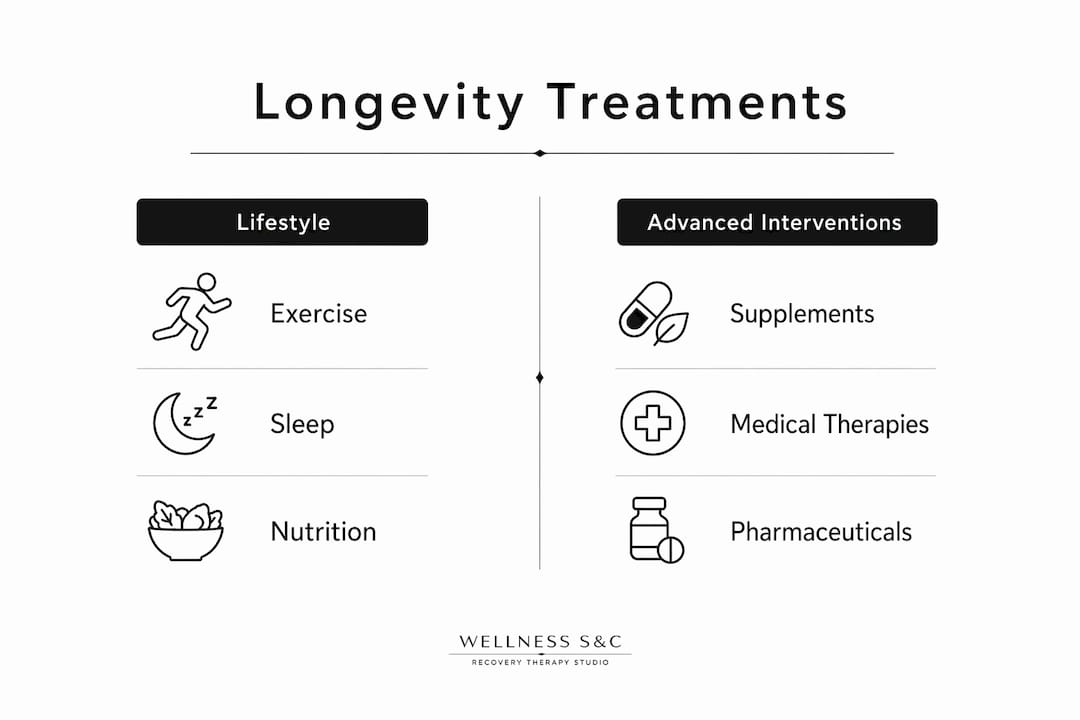
Longevity treatments are defined as evidence-based interventions designed to extend healthspan, the years you live in good health, and potentially lifespan itself. This guide to longevity treatments covers the full spectrum: from free lifestyle practices with the strongest scientific backing to advanced medical options like NAD+ therapy, rapamycin, and peptides. Las Vegas residents have growing access to clinical wellness services that support these goals, making it easier than ever to build a real, personalized protocol. The key is knowing what the evidence actually supports before spending a dollar on anything.
Resistance training is the strongest single longevity predictor among all interventions studied. That is not a minor distinction. It outperforms most supplements, pharmaceuticals, and expensive therapies when measured against actual healthspan outcomes. If you are serious about living longer and feeling better, this is where you start.
The four pillars that experts consistently rank highest for longevity are:
These interventions are free or nearly free. They activate the same biological pathways, autophagy, mTOR regulation, and mitochondrial biogenesis, that expensive supplements claim to target. Experienced practitioners confirm that sleep hygiene, resistance training, and Zone 2 cardio outperform many costly treatments in real-world healthspan impact.
Pro Tip: Build your lifestyle foundation for at least 90 days before adding any supplement or pharmaceutical. You will get more out of every advanced therapy when your baseline is solid.
Once your lifestyle foundation is in place, certain supplements and therapies can provide meaningful additional support. NAD+ (nicotinamide adenine dinucleotide) is the most discussed. NAD+ levels decline with age, and lower levels are linked to reduced cellular energy production and slower DNA repair.

You have three main delivery options for NAD+ support:
| Delivery Method | Cost Range | Evidence Level |
|---|---|---|
| Oral supplements (NMN, NR) | $40–$100/month | Moderate, growing |
| IV NAD+ infusion | $250–$1,500 per session | Limited human trials |
| Subcutaneous injection | Varies by clinic | Early stage |
Oral supplements are the most accessible entry point. IV infusions deliver NAD+ directly into the bloodstream and are used clinically for faster repletion, though they carry a higher cost and require a clinical setting.
Peptides are short chains of amino acids used to signal tissue repair, growth hormone release, and immune regulation. Common options include BPC-157 for tissue healing and CJC-1295 for growth hormone support. Peptide costs typically run $100–$500 per month depending on the compound and dosing protocol.
Senolytics are a newer class of compounds, including quercetin and dasatinib, that target and clear senescent cells. Senescent cells accumulate with age and drive chronic inflammation. Clearing them is a promising mechanism, though human trial data is still limited.
The honest reality is that no large-scale randomized human trials yet prove that NAD+ infusions or peptides slow aging or extend lifespan. Biomarker improvements are real and documented. Actual lifespan extension in humans remains unproven. That distinction matters when you are deciding how to spend your money.
Pro Tip: Before starting any peptide or NAD+ protocol, consult a physician who specializes in longevity or functional medicine. Dosing, sourcing, and timing all affect both safety and results. A good supplement safety guide can help you ask the right questions.
Pharmaceutical longevity agents represent the most aggressive tier of anti-aging treatment. They are also the most regulated, the most studied in animals, and the least proven in healthy humans.
| Drug | Primary Mechanism | Human Evidence | Key Risks |
|---|---|---|---|
| Rapamycin | mTOR inhibition | 9–26% lifespan extension in mice; off-label in humans | Infection risk, glucose elevation |
| Metformin | AMPK activation, glucose regulation | Epigenetic clock changes documented | GI side effects, B12 depletion |
| GLP-1 agonists (e.g., semaglutide) | Metabolic regulation | Epigenetic aging biomarker changes noted | Nausea, cost, long-term unknown |
| SGLT2 inhibitors | Glucose excretion, cardioprotection | Lifespan extension in mice; FDA-approved for diabetes | Off-label use, no longevity trials in healthy adults |
Rapamycin is the most studied longevity pharmaceutical in existence. The Interventions Testing Program (ITP) showed median lifespan extension of 9–14% in mice, with some male cohorts reaching higher figures. In humans, low intermittent dosing of 5–6 mg weekly appears tolerable, with Mannick et al. documenting improved immune function in elderly participants. Side effects include increased infection susceptibility and elevated blood glucose, which is why ongoing blood monitoring is non-negotiable.
Metformin, GLP-1 agonists, and SGLT2 inhibitors all show measurable changes in epigenetic aging clocks. That is meaningful. But epigenetic biomarker changes are distinct from proven lifespan extension. The field is advancing quickly, but the human longevity trial data is still years away from being definitive.
Off-label pharmaceutical use is legal in the United States. Insurance rarely covers it. You will typically pay out of pocket and need a physician willing to monitor your labs regularly. That physician relationship is not optional. It is the safety net that makes these protocols viable.
Building a real longevity protocol means layering interventions in the right order. Here is a practical sequence that reflects the evidence:
Budget matters here. Marketing in the longevity space heavily favors proprietary molecules over free, effective interventions. A $1,500 IV NAD+ session will not compensate for poor sleep and no exercise. Spend your money in the order the evidence supports.
The strongest longevity results come from combining free lifestyle habits with carefully selected clinical therapies, not from expensive supplements alone.
| Point | Details |
|---|---|
| Lifestyle comes first | Resistance training, Zone 2 cardio, and quality sleep deliver the strongest longevity evidence of any intervention. |
| Supplements fill gaps | NAD+ precursors and peptides support cellular health but lack large-scale human lifespan trial data. |
| Pharmaceuticals need supervision | Rapamycin and metformin show real promise but require physician oversight and regular blood monitoring. |
| Biomarkers are not lifespan | Epigenetic clock improvements with drugs like GLP-1 agonists are meaningful but not the same as proven lifespan extension. |
| Sequence your spending | Build lifestyle habits before investing in supplements or pharmaceuticals to maximize the return on every dollar. |
The longevity field has a “shiny object” problem. Every few months, a new molecule gets breathless coverage, and people rush to spend hundreds of dollars on something with two mouse studies behind it. I have seen this pattern repeat with resveratrol, NMN, and now certain peptides. The pattern is predictable because supplement companies market unproven products disproportionately compared to the actual evidence.
What actually moves the needle is boring. Sleep seven to nine hours. Lift weights three times a week. Walk or cycle at a pace where you can hold a conversation for several hours each week. Eat enough protein. These habits activate the same cellular pathways that expensive therapies target, and they do it reliably, for free, with no side effects.
That said, I do think there is real value in clinical therapies like infrared sauna and red light therapy for people who have their lifestyle dialed in. They reduce inflammation, support recovery, and make the lifestyle habits easier to sustain. Rapamycin is genuinely interesting science, and I expect the human trial data to become more compelling over the next decade. But it belongs at the end of the protocol, not the beginning.
The most common mistake I see is people skipping steps two through four and going straight to the expensive stuff. You will spend more, feel less, and wonder why it is not working. Start with what the evidence actually supports. Build from there.
— Argjenta
If you are building a longevity protocol in Las Vegas, clinical recovery therapies are a practical and accessible next step after your lifestyle foundation is in place.
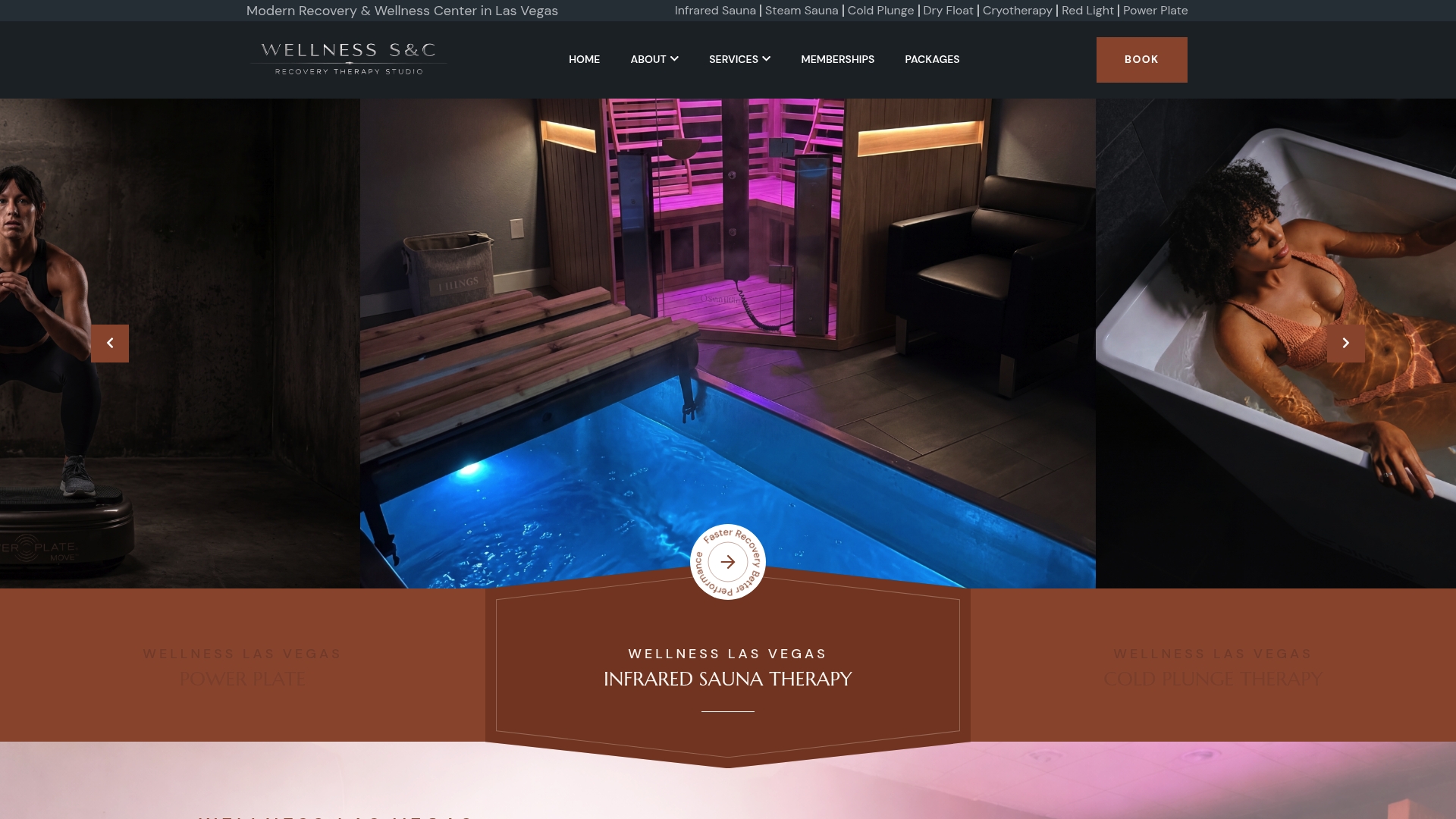
Wellnesslasvegas offers infrared sauna sessions, cryotherapy, red light therapy, cold plunge, and Power Plate training, all in a private, professional environment. Infrared sauna supports circulation and detoxification. Cryotherapy in Las Vegas reduces systemic inflammation and accelerates recovery between training sessions. Red light therapy promotes cellular repair at the mitochondrial level. These therapies are well-tolerated, evidence-supported, and designed to complement the lifestyle and supplement protocols covered in this guide. Book a session at Wellnesslasvegas and add a clinical layer to your longevity plan.
Resistance training is the strongest single longevity predictor across all studied interventions. Combined with Zone 2 cardio, quality sleep, and adequate protein intake, these lifestyle habits outperform most supplements and pharmaceuticals.
NAD+ supplements cost $40–$100 per month and show growing evidence for cellular energy support. IV sessions cost $250–$1,500 and deliver faster repletion, but no large-scale human trials yet confirm lifespan extension from either method.
Rapamycin shows 9–26% median lifespan extension in mice and is used off-label in humans at low intermittent doses. Human lifespan data is not yet available, and the drug requires physician supervision and regular blood monitoring.
Basic supplements like magnesium and omega-3s are generally safe. Advanced options like peptides or senolytics carry more risk and should be reviewed with a physician. A reliable supplement safety resource can help you evaluate what you are considering.
Las Vegas has a growing number of wellness facilities offering infrared sauna, cryotherapy, red light therapy, and cold plunge. Wellnesslasvegas provides all of these in a clinical, private setting designed for recovery and long-term health support.

