- Infrared Sauna Las Vegas | Cold Plunge & Cryotherapy

Step by step wellness planning is a structured, evidence-based process for building physical and mental health through deliberate, sequenced daily actions. Most people skip this structure and wonder why their motivation fades by week three. The difference between lasting change and another abandoned resolution is not willpower. It is a clear plan, realistic timelines, and the right tools. Whether you are an athlete recovering from hard training or a Las Vegas professional managing a high-stress schedule, a personal wellness plan gives you a repeatable system that works with your life, not against it.
Before you write a single goal, you need an honest picture of where you stand. Self-assessment is the foundation of any effective health planning process. Without it, you are setting targets in the dark.
Start by auditing four areas: sleep quality, daily movement, nutrition patterns, and stress levels. You do not need a clinical evaluation. A simple journal or a personalized wellness monitoring plan works well for most people. Rate each area on a scale of one to ten and note what is already working. This baseline becomes your reference point for every check-in that follows.

Tracking tools make this process faster and more accurate. The table below covers the most practical options:
| Tool | Best For | Cost Range |
|---|---|---|
| Apple Watch / Garmin | Heart rate, sleep, activity tracking | $200+ |
| MyFitnessPal | Nutrition logging | Free / $20/month |
| Oura Ring | Sleep and recovery scoring | $299 device |
| Notion or Google Sheets | Custom wellness journaling | Free |
| Biomarker testing (Biostarks) | Blood-based metabolic baseline | Varies |
Mindset is as important as any app. Small, steady daily choices outperform attempts at rapid perfection for long-term health. This means you should expect slow progress and plan for it. Research supports a 4 to 8 week window for habit formation when paired with scheduled weekly check-ins. That timeline is not a limitation. It is a biological reality you can use to your advantage.
Pro Tip: Set a calendar reminder every Sunday for a 10-minute wellness review. Reviewing the previous week before planning the next one cuts decision fatigue and keeps your plan grounded in real data, not optimism.
A personal wellness plan works best when it follows a clear sequence. Skipping steps, especially the assessment and goal-setting phases, is the most common reason plans collapse within a month.
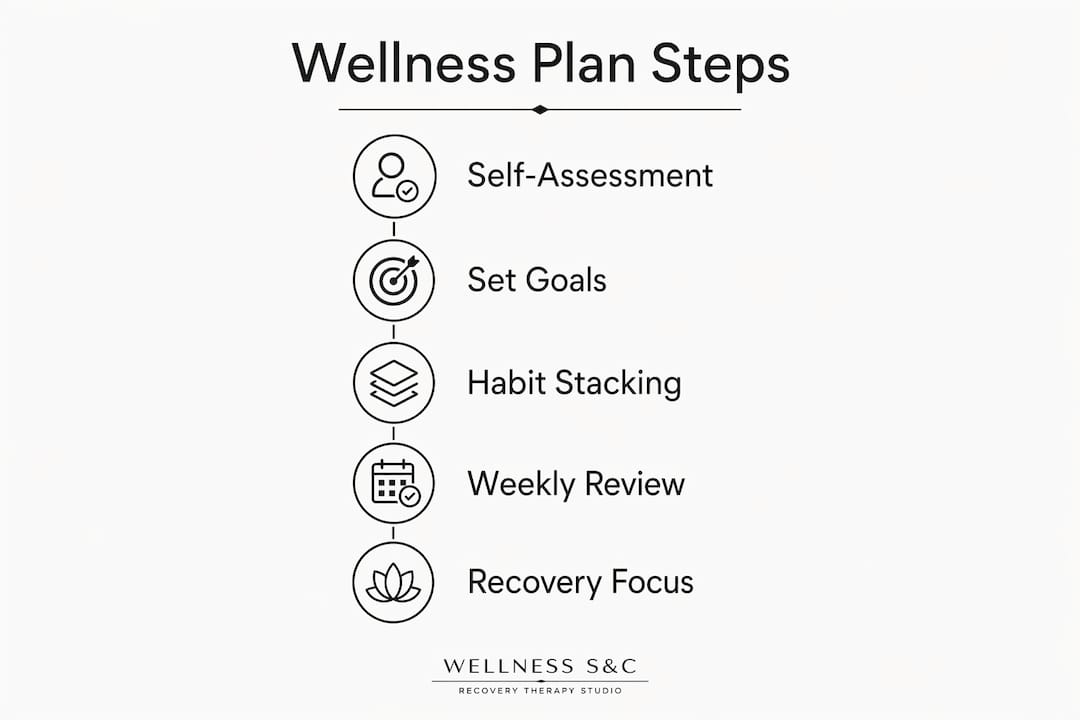
Evaluate your physical, mental, and emotional health as separate but connected dimensions. Note your energy levels at different times of day, your sleep consistency, your relationship with food, and your stress triggers. This is not a judgment exercise. It is data collection.
Vague goals like “get healthier” produce vague results. Instead, write goals tied to something you care about. “I want to sleep seven hours consistently so I have energy for my morning workouts” is specific and personal. Attach each goal to a reason, and you create internal motivation that outlasts novelty.
Habit stacking anchors new behaviors to existing routines, which dramatically improves adherence. If you already make coffee every morning, stack a five-minute breathing exercise directly after it. The existing habit becomes the trigger. You reduce reliance on willpower and make the new behavior nearly automatic.
Review your progress every seven days. Ask three questions: What worked? What did not? What needs to change? This is where your wellness checklist becomes a living document rather than a static list. Adjust your plan based on real feedback, not theory.
The table below compares two common approaches to wellness planning:
| Approach | Strengths | Weaknesses |
|---|---|---|
| All-at-once overhaul | Fast initial momentum | High burnout rate, unsustainable |
| Stepwise layering method | Sustainable, lower stress | Slower visible results early on |
Attempting to overhaul your lifestyle all at once leads to burnout. The 30-day layering method, where you master one habit before adding another, produces lasting change. Start with sleep or hydration. Add movement in week five. Add nutrition changes in week nine. Each layer reinforces the one before it.
Pro Tip: Write your top three wellness goals on a sticky note and place it on your bathroom mirror. Seeing your goals daily takes less than two seconds and keeps your intentions front of mind without requiring any extra effort.
A holistic wellness roadmap integrates nutrition, movement, and mindfulness because of biologically linked pathways like the gut-brain axis. Improving one pillar creates measurable ripple effects in the others. This is why treating wellness as a single-focus project, like “just exercising more,” rarely delivers the full results people expect.
Here is how to build each pillar into your plan:
The 30-day layering method applies here too. Sequence your changes so each one has time to stabilize before the next is introduced. Start with sleep in month one. Add structured movement in month two. Layer in nutrition adjustments in month three. By month four, all four pillars are active and reinforcing each other.
You can also explore relaxation therapy methods that complement these pillars, particularly for stress management and nervous system recovery.
Setbacks are not signs of failure. They are a predictable part of any health planning process. Biological changes in cortisol regulation and heart rate variability may take 8 to 12 weeks of consistent practice to manifest visibly. Knowing this in advance prevents you from quitting at week six when results feel slow.
Here are the most effective strategies for staying on track:
“The goal is not to be perfect. The goal is to be consistent enough that your defaults shift over time.”
For a deeper look at building a recovery-focused routine, the Las Vegas wellness guide covers local options for stress relief and longevity support.
Effective step by step wellness planning requires a self-assessment baseline, sequenced habit building, and consistent weekly reviews across nutrition, movement, mindfulness, and recovery.
| Point | Details |
|---|---|
| Start with self-assessment | Audit sleep, movement, nutrition, and stress before setting any goals. |
| Use the 30-day layering method | Add one new habit every 30 days to prevent burnout and build lasting routines. |
| Hit 150 minutes of movement weekly | Brisk walking, yoga, or swimming are low-risk options that fit most schedules. |
| Sleep 7 to 9 hours consistently | Sleep improvements become noticeable within one to two weeks of a fixed schedule. |
| Flexibility beats perfection | Adjusting your plan during setbacks predicts long-term success better than rigid adherence. |
Living and working in Las Vegas teaches you something most wellness guides ignore: your environment shapes your defaults more than your intentions do. The city runs late, the heat is extreme for half the year, and the pace of life does not naturally reward rest. That is exactly why structure matters here more than anywhere else.
When I started applying the layering method, I focused on sleep first. Not workouts, not nutrition. Just sleep. Within two weeks, my energy improved enough that movement felt like a natural next step rather than a chore. That sequence matters. Trying to fix everything at once in a city that never slows down is a recipe for giving up by week two.
I have also found that Las Vegas residents underestimate recovery as a wellness pillar. Most people plan their workouts and their meals but leave recovery to chance. Infrared sauna sessions, cold plunge therapy, and structured rest days are not luxuries. They are the part of the plan that makes everything else sustainable. You can explore a personalized wellness process to see how recovery fits into a full weekly structure.
The most important shift is treating your wellness plan as a living document. Review it, adjust it, and give yourself credit for showing up. Self-compassion is not soft. It is the mechanism that keeps the plan alive past the first month.
— Argjenta
A well-designed wellness plan includes recovery as a core component, not an afterthought. Wellnesslasvegas offers science-backed therapies that directly support the pillars you are building: infrared sauna therapy promotes circulation, detoxification, and deep muscle recovery, while cryotherapy treatments reduce inflammation and accelerate physical recovery between training sessions. Both services integrate naturally into a weekly wellness schedule and are available in a private, professional environment designed for comfort. If you are serious about your health planning process, adding structured recovery sessions is one of the highest-return investments you can make. Book a session at Wellnesslasvegas and give your plan the recovery foundation it needs.
Step by step wellness planning is a structured approach to improving health by sequencing small, specific changes across nutrition, movement, sleep, and stress management. It replaces vague health goals with a clear, ordered process that builds sustainable habits over time.
Mood and energy improvements often appear within one to two weeks of consistent sleep and movement changes. Significant physiological shifts, like improved cortisol regulation and heart rate variability, typically require 8 to 12 weeks of consistent practice.
Wearables like the Apple Watch, Garmin, and Oura Ring track sleep and activity automatically. Apps like MyFitnessPal support nutrition logging, while a wellness optimization checklist can help you track metabolic health markers alongside lifestyle habits.
Use habit stacking to anchor new behaviors to existing routines, schedule weekly check-ins every Sunday, and track energy and mood alongside actions. An accountability partner or local wellness group significantly increases follow-through.
Recovery, including quality sleep, rest days, and therapies like infrared sauna or cold plunge, is the pillar that makes all other wellness efforts sustainable. Without structured recovery, physical and mental performance decline regardless of how well you eat or train.

