- Infrared Sauna Las Vegas | Cold Plunge & Cryotherapy

Recovery routines are defined as the structured practices that allow your body to repair tissue, restore energy, and adapt to training stress between sessions. The importance of recovery routines is grounded in biology: adaptations like muscle growth and power gains happen exclusively during recovery, not during the workout itself. Without a deliberate recovery plan, training stress accumulates faster than your body can absorb it, leading to fatigue, injury, and stalled progress. Whether you are a competitive athlete in Las Vegas or someone managing chronic pain and daily stress, a consistent recovery practice is the foundation that makes every other wellness effort work.
Most people treat recovery as passive, something that just happens when they stop moving. That misunderstanding costs real performance. Training creates the stimulus, but the physiological upgrades, stronger muscle fibers, better oxygen delivery, sharper neuromuscular coordination, only materialize when recovery is actively managed.
The physical benefits are concrete and measurable. Active recovery reduces delayed-onset muscle soreness by up to 40% compared to complete rest. That gap matters because soreness is not just discomfort. It signals incomplete repair, which raises injury risk and reduces output in your next session.
The psychological benefits are equally significant. Overtraining before recovery is complete triggers elevated cortisol, disrupted sleep, and a measurable drop in motivation. Structured rest days protect mental resilience just as much as they protect muscle tissue. Recovery is the biological response that drives adaptation, and treating it as optional is the single most common reason people plateau.
“Consistent application of the Four R’s framework, Refuel, Repair, Rehydrate, and Rest, outperforms reliance on any single elaborate recovery tool.”
Sleep sits at the center of every effective recovery plan. It governs physical repair, mood regulation, and cognitive function simultaneously. Skipping or shortchanging sleep does not just make you tired. It actively reverses the adaptations your training was designed to create.
Evidence shows that recovery strategy effectiveness varies by target outcome, meaning no single method wins across every goal. Matching the right tool to the right problem is what separates a good recovery plan from a great one.
The table below maps the most evidence-backed modalities to their primary recovery targets.
| Modality | Primary recovery target | Best timing |
|---|---|---|
| Far-infrared therapy | Vertical jump height restoration | 1–2 hours post-training |
| Cold compression | Muscle soreness reduction | Within 30 minutes post-training |
| Active recovery (30–50% effort) | Blood lactate clearance | Same day or next morning |
| Protein intake (1.6–2.2g/kg/day) | Tissue repair and muscle synthesis | Within 2 hours post-training |
| Sleep (8+ hours, 62–68°F room) | Full-body repair and cognitive reset | Nightly, consistent timing |
| Foam rolling | Blood flow and soreness relief | Pre or post-session |
Far-infrared therapy earned a SUCRA ranking of 98.3% for restoring vertical jump height in elite athletes. Cold compression ranked even higher at 98.9% for reducing muscle soreness. Those numbers reflect how specifically these tools perform when matched to the right goal.
Foam rolling and active recovery increase blood flow and clear metabolic waste more effectively than passive rest. Active recovery at 30–50% of maximum effort accelerates blood lactate clearance and delivers nutrients to damaged muscle fibers. This is why a light walk or easy bike ride the day after a hard session beats lying on the couch.
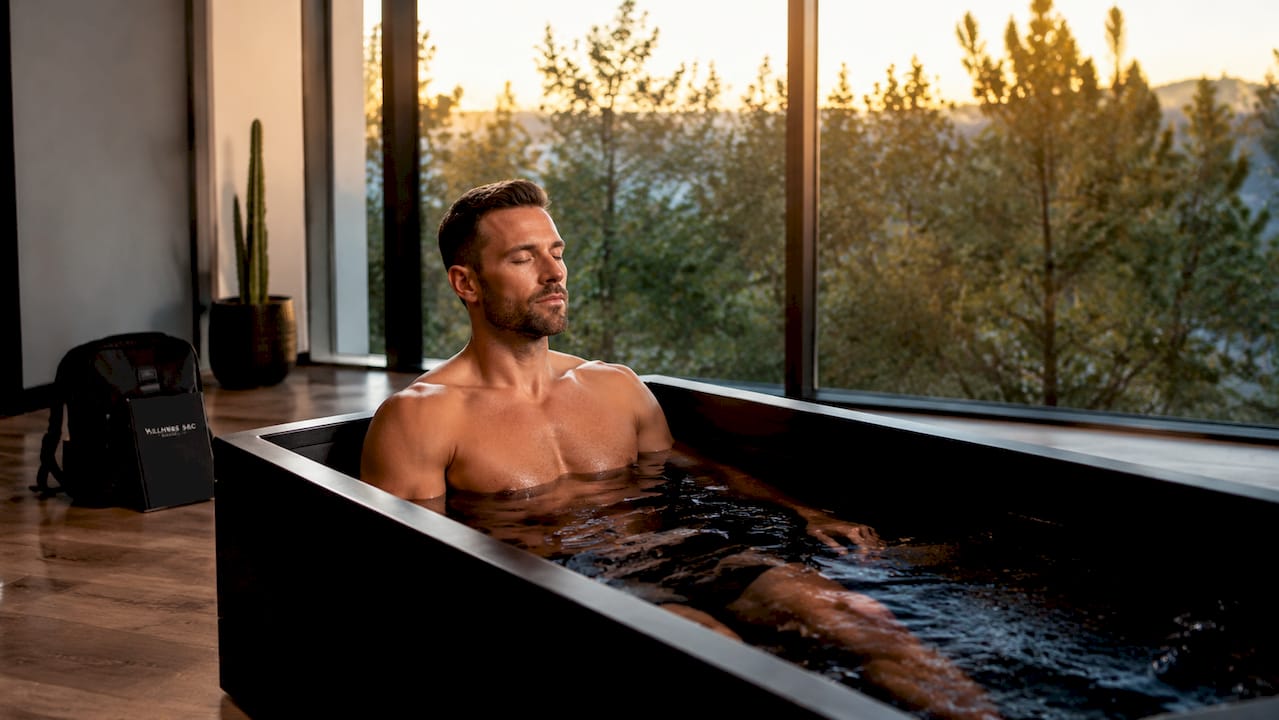
Pro Tip: Avoid cold exposure within 6 hours of a hypertrophy-focused training session. Cold therapy timing is critical because early cold exposure can blunt the muscle growth signaling your workout just triggered.
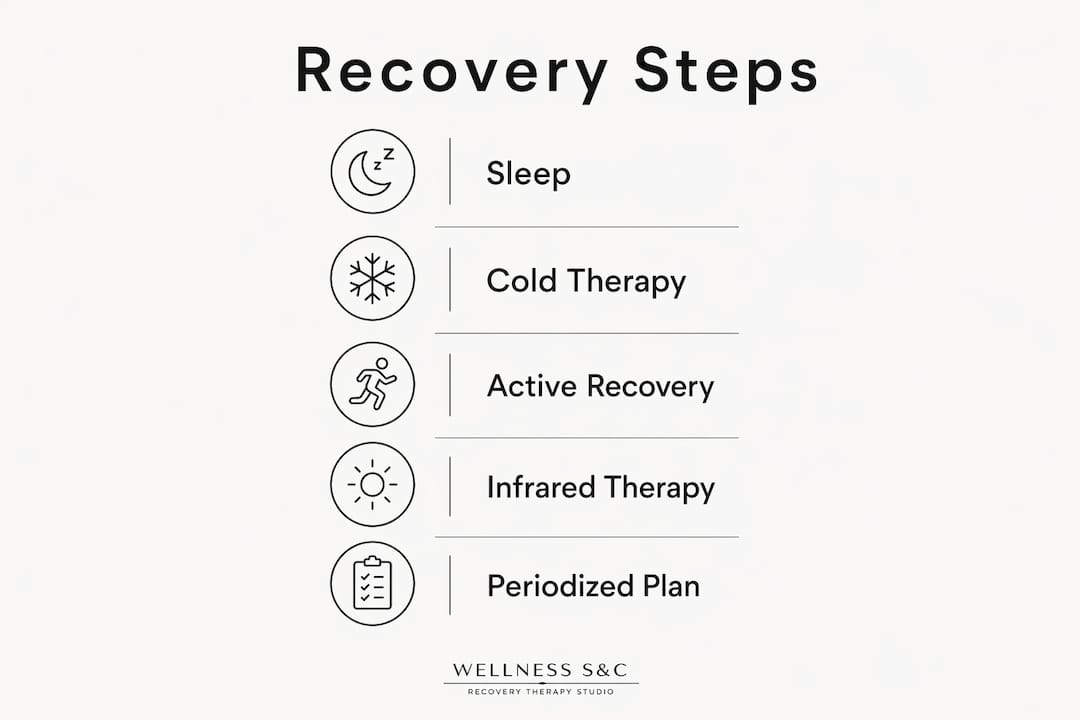
A periodized recovery approach adjusts your methods across training phases. During high-volume training blocks, prioritize sleep and nutrition. During deload weeks, add active modalities like infrared sauna or contrast therapy. Recovery needs evolve with training intensity, and your plan should evolve with them.
Building a recovery routine that actually sticks requires structure, not willpower. The Four R’s framework gives you that structure: Refuel, Repair, Rehydrate, and Rest. Each element addresses a distinct physiological need, and skipping any one of them creates a gap your body cannot compensate for.
Here is how to apply the Four R’s in a practical daily sequence:
Sleep timing consistency matters as much as sleep duration. Weekend sleep drift disrupts your circadian rhythm and impairs recovery quality even when total hours look adequate. Waking up two hours later on Saturday than on weekdays is enough to offset a week of good sleep habits.
Pro Tip: Track two simple metrics daily: resting heart rate and subjective energy on a 1–10 scale. A resting heart rate elevated by more than 5–7 beats above your baseline is a reliable early warning sign of overtraining and incomplete recovery.
Managing your total stress budget is the piece most recovery guides ignore. Training stress and life stress draw from the same physiological reserve. A brutal week at work requires the same recovery attention as a brutal week of training. Recognizing that connection is what separates people who make consistent progress from those who cycle through burnout.
Las Vegas offers access to clinical-grade recovery therapies that most cities cannot match for convenience or quality. These modalities work best as complements to your foundational routine, not replacements for sleep and nutrition.
The science-backed recovery strategies available locally mean you do not need to travel or wait for access to elite-level tools. Integrating one or two of these sessions per week alongside your foundational routine produces compounding results over time.
Consistent, structured recovery routines are the biological mechanism through which training stress converts into strength, resilience, and lasting performance gains.
| Point | Details |
|---|---|
| Recovery drives adaptation | Muscle growth and power gains occur during recovery, not during training itself. |
| Match modality to goal | Cold compression leads for soreness; far-infrared therapy leads for power restoration. |
| Four R’s as your foundation | Refuel, Repair, Rehydrate, and Rest address every physiological recovery need. |
| Sleep timing is non-negotiable | Weekend sleep drift disrupts circadian rhythm and undermines a full week of recovery effort. |
| Advanced therapies compound results | Infrared sauna, cryotherapy, and contrast therapy accelerate recovery when layered onto solid fundamentals. |
By Argjenta
The pattern I see most often is this: someone trains hard for six weeks, makes real progress, then gets injured or burns out and loses three weeks to forced rest. They blame the training. The real problem was always the recovery.
What most fitness content gets wrong is treating recovery as passive downtime. Recovery is a skill. It requires the same intentionality as programming your workouts. You have to actively practice it, track it, and adjust it the same way you adjust training load.
The people I have seen make the most consistent progress over years, not months, are the ones who treat their sleep schedule like a training variable. They protect it. They do not sacrifice it for one more late night out. They understand that the link between sleep and muscle recovery is not motivational language. It is physiology.
My honest recommendation for anyone in Las Vegas: use the city’s access to world-class recovery facilities as a genuine training tool, not a luxury. A weekly infrared sauna session or contrast therapy appointment is not indulgent. It is the kind of structured recovery investment that pays back in performance and longevity. Stop treating recovery as the reward for hard training. It is the mechanism that makes hard training worth doing.
— Argjenta
Wellnesslasvegas is a dedicated recovery and wellness facility in Las Vegas offering infrared sauna, cryotherapy, cold plunge, contrast therapy, red light therapy, dry float therapy, and Power Plate training. Every service is designed around the science of post-workout recovery and stress reduction.
If you are ready to build a recovery routine that actually produces results, Wellnesslasvegas has the tools and environment to support it. Book an infrared sauna session to accelerate muscle repair, or explore cryotherapy in Las Vegas to reduce inflammation after intense training. You can also review the full range of wellness services in Las Vegas to find the combination that fits your goals and schedule.
A recovery routine is a structured set of practices, including sleep, nutrition, hydration, and targeted therapies, that allow the body to repair tissue and adapt to training stress between sessions.
Most people benefit from one to two dedicated recovery days per week, with light movement like walking or foam rolling rather than complete inactivity, which reduces soreness more effectively than passive rest.
Sleep is the single most powerful recovery tool available. Eight or more hours in a cool, dark room supports muscle repair, hormone regulation, and cognitive performance simultaneously.
The best choice depends on your goal. Cold compression and cryotherapy lead for reducing muscle soreness, while far-infrared therapy ranks highest for restoring explosive power. Contrast therapy combining both delivers benefits across multiple recovery targets.
Yes. Structured recovery practices reduce cortisol, improve circulation, and support nervous system regulation, all of which directly address the physiological drivers of chronic pain and stress. Modalities like dry float therapy and red light therapy are particularly effective for people managing ongoing pain.

