- Infrared Sauna Las Vegas | Cold Plunge & Cryotherapy
Power Plate fitness science is defined as the study of how whole-body vibration training triggers neurological and physiological adaptations that improve strength, balance, and recovery. The technology works through a mechanism called the tonic vibration reflex, where rapid mechanical vibrations cause involuntary muscle contractions that recruit more motor units than voluntary effort alone. Athletes, rehabilitation patients, and fitness-focused individuals in Las Vegas use Power Plate training to accelerate recovery, sharpen neuromuscular control, and build functional strength. Research published in early 2026 confirms measurable improvements in muscle strength, bone density, and balance across multiple populations, making this one of the more evidence-supported tools in modern recovery science.
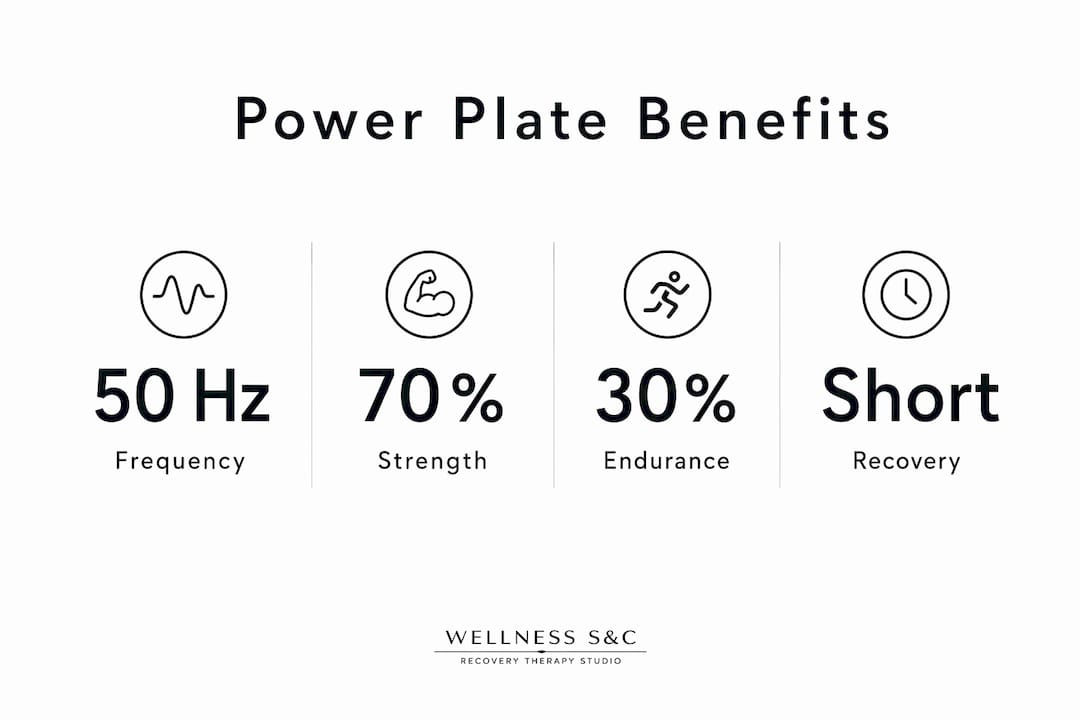
Whole-body vibration training produces real, measurable results, but the benefits depend heavily on frequency, duration, and how actively you engage during each session. A 2026 meta-analysis of 1,447 participants found that whole-body vibration training significantly improves bone mineral density in elderly adults and muscle strength across multiple populations. The study identified 50 Hz as the superior frequency for strength outcomes compared to 30 Hz. That finding matters because it gives practitioners a specific, evidence-based target rather than a general range.
For athletes, the results are equally concrete. A randomized controlled trial with sub-elite speed skaters showed that four weeks of 50 Hz vibration training at 2 mm amplitude, twice weekly, produced significant gains in knee flexor and extensor strength and endurance. The 50 Hz group outperformed the 30 Hz group on every measured outcome. That kind of specificity is rare in fitness research and gives coaches a reliable protocol to follow.
The vibration training benefits look different depending on who is using the platform:
One important boundary exists here. Vibration plates do not produce significant fat loss or muscle hypertrophy on their own. They work best as a complement to resistance training and cardio, not as a replacement. That distinction separates realistic expectations from marketing hype.
Power Plate uses tri-planar vibration, which delivers mechanical stimuli across three axes simultaneously: vertical, horizontal, and lateral. Standard single-axis platforms move in one direction only. Tri-planar vibration challenges stabilizer muscles in multiple planes at once, producing greater neuromuscular engagement than linear platforms can achieve.
The core mechanism behind this is the tonic vibration reflex. When the platform vibrates, your muscles detect the rapid stretch through sensory receptors called muscle spindles. Those spindles send signals to your spinal cord, which fires back motor commands that cause involuntary muscle contractions beyond what you can produce voluntarily. The result is a higher percentage of motor unit recruitment during every exercise you perform on the platform.
This neurological activation also improves the communication pathway between your nervous system and your muscles. Power Plate technology strengthens that signal loop, which translates to better movement confidence, faster reaction time, and more efficient force production during everyday activities and sport. Think of it as training your nervous system and your muscles at the same time, rather than one at a time.
Pro Tip: Stand with a slight knee bend during any Power Plate exercise. Locking your knees reduces the vibration transfer to your muscles and cuts the neuromuscular benefit significantly.
Structure matters more than effort on a Power Plate. Passive standing with no movement produces minimal benefit. Active engagement during vibration is what drives adaptation.
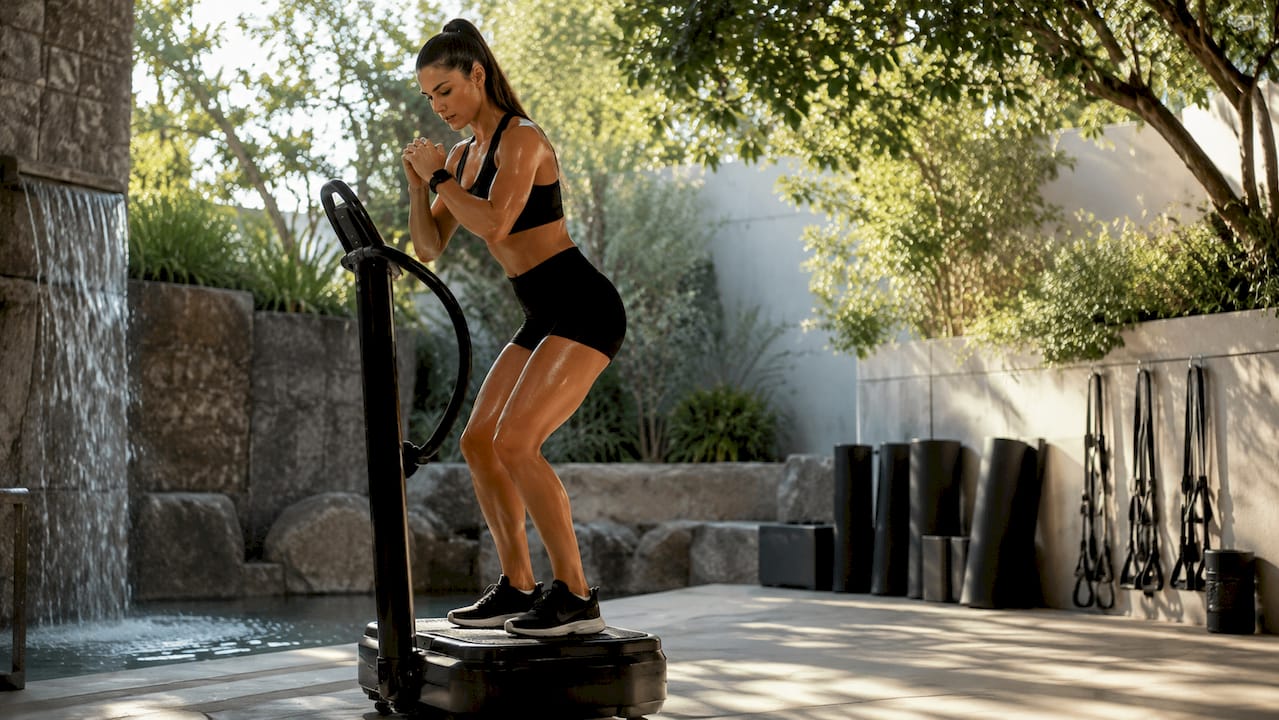
Beginners should start with 1–2 minutes of passive standing at low frequency (5–10 Hz) to prepare the central nervous system and avoid dizziness. After that warm-up phase, move into active exercises at higher frequencies. Follow this progression:
The most effective Power Plate workout techniques pair voluntary muscle effort with the platform’s mechanical stimulus. Squats, lunges, push-up holds, and calf raises all transfer vibration efficiently to the target muscles. For recovery, low-frequency (5–10 Hz) passive standing or gentle stretching on the platform promotes blood flow and lymphatic drainage without adding training stress. This makes it an ideal post-workout recovery tool for athletes who train daily.
In Las Vegas, where heat and dehydration can slow recovery between sessions, using a low-frequency Power Plate protocol after training helps maintain circulation without adding physical load. Pairing that with contrast therapy or infrared sauna creates a recovery sequence that addresses multiple physiological systems at once.
Pro Tip: Use the 5 Hz setting for your cool-down. Standing relaxed on the platform at that frequency gently stimulates lymphatic flow and helps clear metabolic waste from muscles faster than static stretching alone.
Power Plate training is safe for most people, but it is not appropriate for everyone and it does not do everything. Medical experts at the University of Rochester recommend vibration plates as adjunct tools for warm-up, recovery, and balance training. They do not recommend them as standalone fat-burning or muscle-building solutions.
Populations who benefit most from whole-body vibration exercises include:
Populations who should use caution or avoid the platform entirely include:
The most common beginner mistake is passive standing without movement. Standing still on a high-frequency setting without engaging muscles can cause dizziness and provides little training benefit. Always pair vibration with active movement or intentional muscle engagement. Starting at low frequency and building gradually eliminates most discomfort risks.
Power Plate training produces its strongest results when 50 Hz frequency is combined with active muscle engagement and a structured progression from low to high intensity.
| Point | Details |
|---|---|
| Optimal frequency is 50 Hz | Research shows 50 Hz outperforms 30 Hz for muscle strength and endurance gains. |
| Tonic vibration reflex drives results | Involuntary contractions recruit more motor units than voluntary effort alone. |
| Tri-planar vibration adds depth | Three-axis stimulation activates stabilizer muscles that single-axis platforms miss. |
| Active engagement is required | Passive standing produces minimal benefit; pair vibration with squats, lunges, or holds. |
| Use as a complement, not a replacement | Vibration training enhances cardio and resistance work but does not substitute for either. |
Most fitness conversations about Power Plate focus on the physical outcomes: stronger legs, better balance, faster recovery. Those outcomes are real. But the more interesting story is what happens neurologically, and that part rarely gets the attention it deserves.
I have worked with clients who came in skeptical, expecting a glorified massage machine. What changed their minds was not the soreness they felt the next day. It was the improvement in their movement quality within two to three weeks. Squats felt more controlled. Single-leg balance improved noticeably. That is the nervous system adapting, not just the muscles.
The tonic vibration reflex essentially forces your body to recruit muscle fibers it normally ignores during voluntary exercise. For deconditioned clients or older adults, that is a significant advantage. For trained athletes, it fills in the gaps that traditional lifting leaves behind, particularly in deep stabilizers and smaller joint-support muscles.
My honest observation after seeing many clients use this technology is that the people who get the most from it are the ones who treat it as a neurological training tool, not a shortcut. They show up consistently, they engage actively, and they pair it with low-impact recovery strategies that let their nervous system consolidate the adaptations. The people who stand passively and expect results are always disappointed. The science is clear on this: vibration is a stimulus, and your body still has to do the work.
— Argjenta
Wellnesslasvegas offers Power Plate sessions in Las Vegas guided by staff who understand both the science and the practical application. Sessions are structured to match your fitness level, whether you are a competitive athlete or someone returning to exercise after time off.
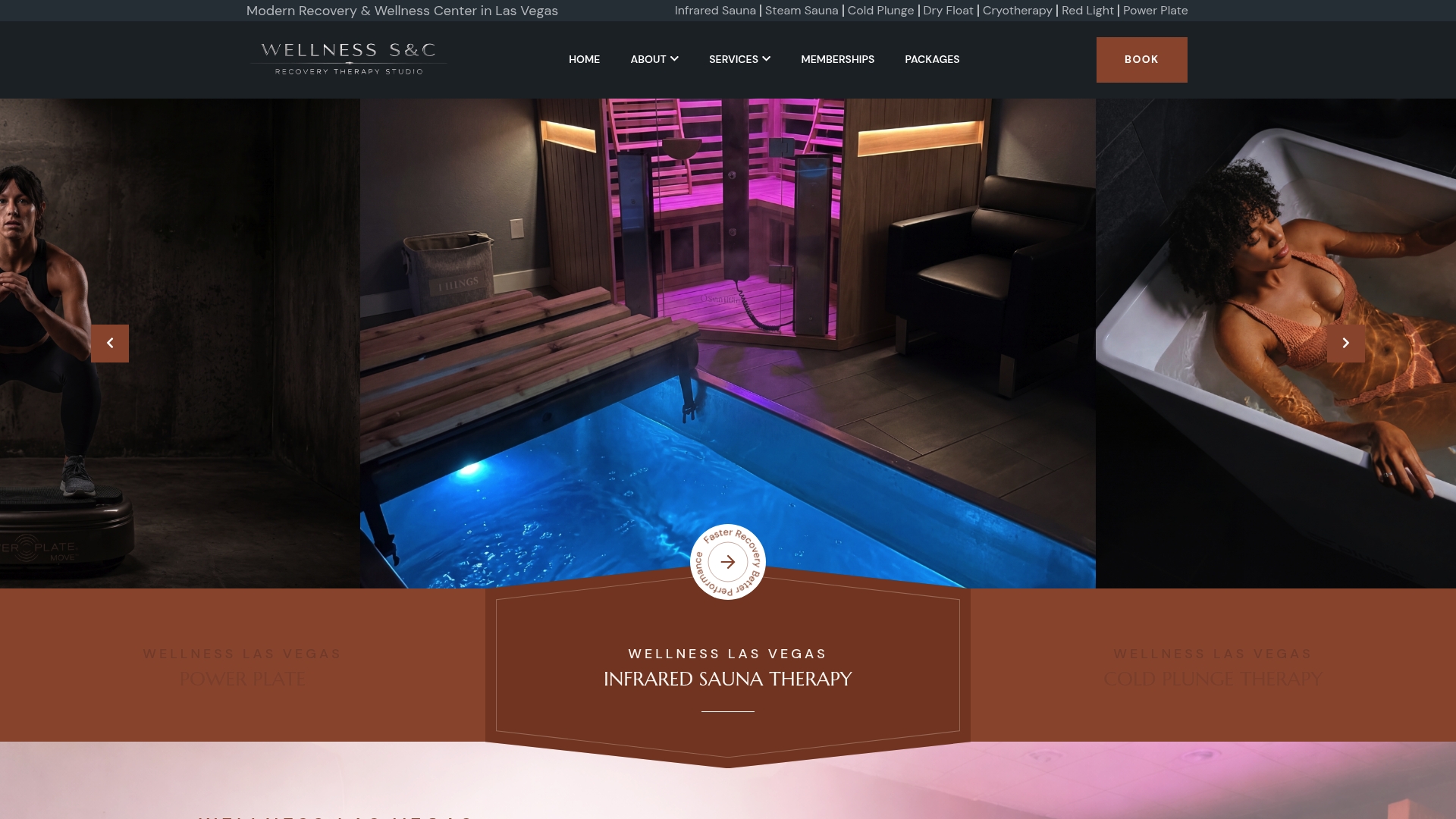
The real advantage at Wellnesslasvegas is the ability to combine Power Plate training with complementary recovery therapies in one visit. After a vibration training session, pairing it with infrared sauna recovery or contrast therapy accelerates circulation, reduces inflammation, and helps your nervous system recover faster. For Las Vegas athletes and active professionals managing heat, training load, and busy schedules, that combination delivers results that single-modality sessions cannot match. Book a session and experience the difference a structured, science-backed protocol makes.
Power Plate uses whole-body vibration to trigger the tonic vibration reflex, causing involuntary muscle contractions that recruit more motor units than voluntary exercise alone. This increases neuromuscular activation across multiple muscle groups simultaneously.
Research from a 2026 randomized controlled trial shows 50 Hz produces superior gains in muscle strength and endurance compared to 30 Hz. Use 5–10 Hz for warm-up and recovery, and 50 Hz for performance-focused sessions.
No. Medical experts confirm that vibration plates do not produce significant muscle hypertrophy or fat loss without traditional exercise. Power Plate works best as an adjunct to resistance training and cardio, not a substitute.
Beginners should start with 5–15 minute sessions, 2–3 times weekly. As your body adapts, sessions can extend to 20 minutes at 4–5 times per week for more advanced training goals.
People with acute back pain, sciatica, herniated discs, cardiovascular implants, or acute joint inflammation should avoid vibration plate use. Pregnant women should also refrain. Anyone with a medical condition should consult a physician before starting whole-body vibration exercises.

