- Infrared Sauna Las Vegas | Cold Plunge & Cryotherapy

Wellness facilities are health centers that bring multiple care modalities together under one roof, treating the whole person rather than isolated symptoms. Instead of visiting a chiropractor on Monday, a nutritionist on Wednesday, and a massage therapist on Friday, you get coordinated care from a team that shares your health history and goals. That shift from symptom management to root-cause care is what separates a true wellness center from a standard gym or day spa.
Most holistic health centers include a combination of:
The Connecticut Department of Mental Health and Addiction Services recognizes this range of integrative modalities as a legitimate framework for addressing health at its roots, not just its surface.
The service mix at any given center depends on its focus, but most full-service wellness facilities share a recognizable core. Medically integrated centers like NorthPointe Spa & Wellness go further, combining fitness and spa services with clinical care in a single location.
Typical offerings include:
Specialized recovery-focused centers add infrared sauna, cryotherapy, red light therapy, cold plunge, and contrast therapy to that list. These therapies target circulation, inflammation, and cellular recovery in ways that traditional gym amenities simply don’t.
Pro Tip: If you’re evaluating a wellness center, ask whether its practitioners share notes and coordinate care. A facility where your massage therapist knows your chiropractic history will deliver better outcomes than one where each provider works in isolation.

The benefits of consistent use go well beyond relaxation. Regular visits to a wellness center support physical recovery, mental health, and long-term disease prevention in measurable ways.
Key benefits include:
The depth of care matters. Integrative clinics often schedule sessions that are significantly longer than a standard primary care visit, which typically lasts less than 16 minutes. That extra time allows practitioners to identify patterns, educate you on root causes, and build a plan that actually sticks.
Consistency is the multiplier. A single infrared sauna session feels good. A regular practice of sauna, cold plunge, and recovery therapy produces compounding results in circulation, inflammation control, and stress resilience.
The best wellness centers today look very different from the clinical spaces of a decade ago. Design, technology, and care philosophy have all evolved together.
A multi-specialty, collaborative team treating mind, body, and spirit collectively is the defining feature of a top-tier facility. Practitioners share patient information, coordinate treatment plans, and meet regularly to align on outcomes. You’re not bouncing between disconnected providers; you’re working with a unified team.
Beyond staffing, physical design plays a direct role in recovery. Architectural hub-and-spoke models separate high-energy fitness zones from quiet restorative areas, so the transition from a hard workout to a sauna session feels intentional rather than jarring.
Other features that distinguish leading facilities:
Pro Tip: Book your first visit during a quieter time of day. You’ll get more face time with practitioners, a proper tour of the facility, and a clearer sense of whether the environment actually supports your recovery goals.
Integrated care means your providers talk to each other. At a true wellness center, a functional medicine doctor, acupuncturist, and nutritionist might all be working toward the same goal for the same person at the same time. That coordination is what produces results that single-modality care rarely achieves.
The GW Center for Integrative Medicine describes this model as treating the underlying drivers of illness rather than just managing symptoms. Every treatment plan is personalized, and the care team collaborates across disciplines. For people dealing with chronic fatigue, pain, hormonal imbalance, or long-term stress, that approach often reaches places that conventional medicine misses.
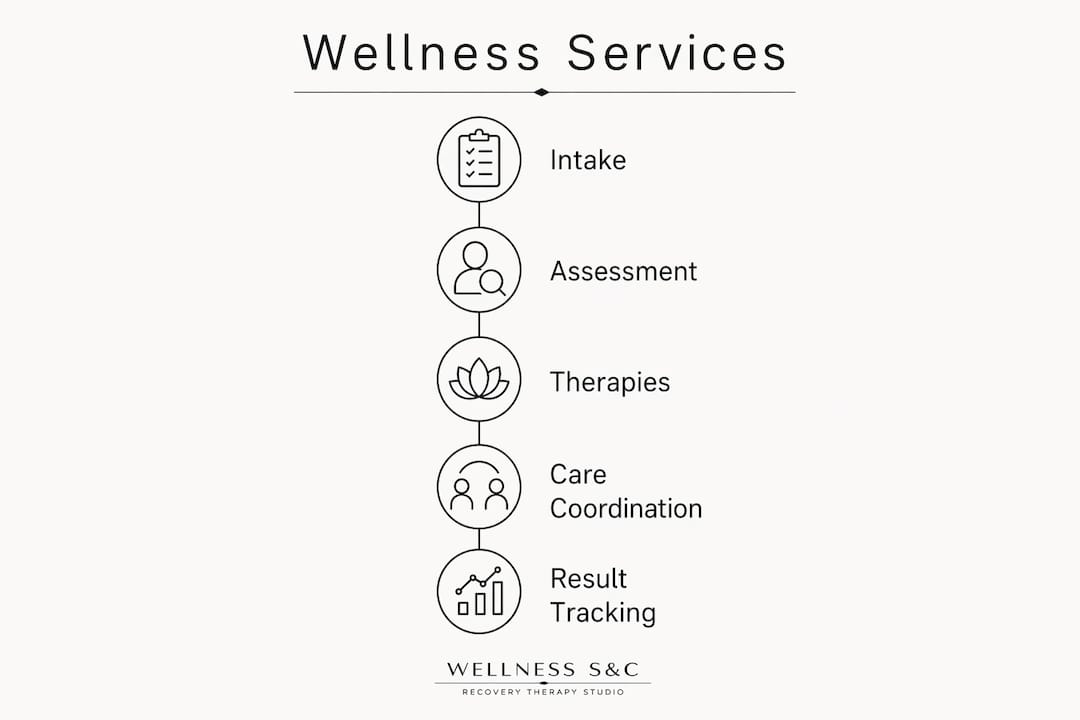
A personalized wellness process typically starts with a comprehensive intake, moves through targeted therapies, and adjusts over time based on how your body responds. That feedback loop is what makes integrated care different from a one-size-fits-all program.
Not every center is the right fit. Here’s how to evaluate your options clearly.
Start with your primary goal. Recovery from athletic training calls for different services than managing chronic stress or addressing a specific health condition. Knowing your goal narrows the field quickly.
Check practitioner credentials. Licensed acupuncturists, board-certified functional medicine doctors, and registered dietitians carry verifiable credentials. Ask directly, and look for centers that list their practitioners’ qualifications publicly.
Assess the environment. A facility that feels clinical and cold works against recovery. Look for natural light, clean private spaces, and a layout that separates active zones from quiet ones, as wellness design research consistently shows that environment directly affects outcomes.
Ask about care coordination. Does your massage therapist know what your chiropractor is working on? If providers operate in silos, you lose the core benefit of an integrated facility.
Consider location and scheduling. A great facility you can’t get to consistently won’t help. For Las Vegas residents, proximity to the Strip corridor or major neighborhoods matters for building a real routine.
Reputable wellness centers operate under clear licensing and safety standards. In the United States, individual practitioners must hold state-issued licenses in their specialty, whether that’s chiropractic, acupuncture, massage therapy, or nutrition counseling. The facility itself may carry accreditation from bodies such as The Joint Commission for any clinical services offered on-site.
For recovery-focused therapies like cryotherapy and infrared sauna, look for facilities that follow manufacturer safety protocols, conduct proper client screenings, and maintain clean, well-serviced equipment. Private rooms, staff training, and clear contraindication policies are non-negotiable markers of a professional operation.
Insurance coverage for integrative services varies. Some centers accept insurance for chiropractic, acupuncture, and physical therapy. Many other services are paid out of pocket or through FSA and HSA accounts. Always confirm billing options before your first visit.
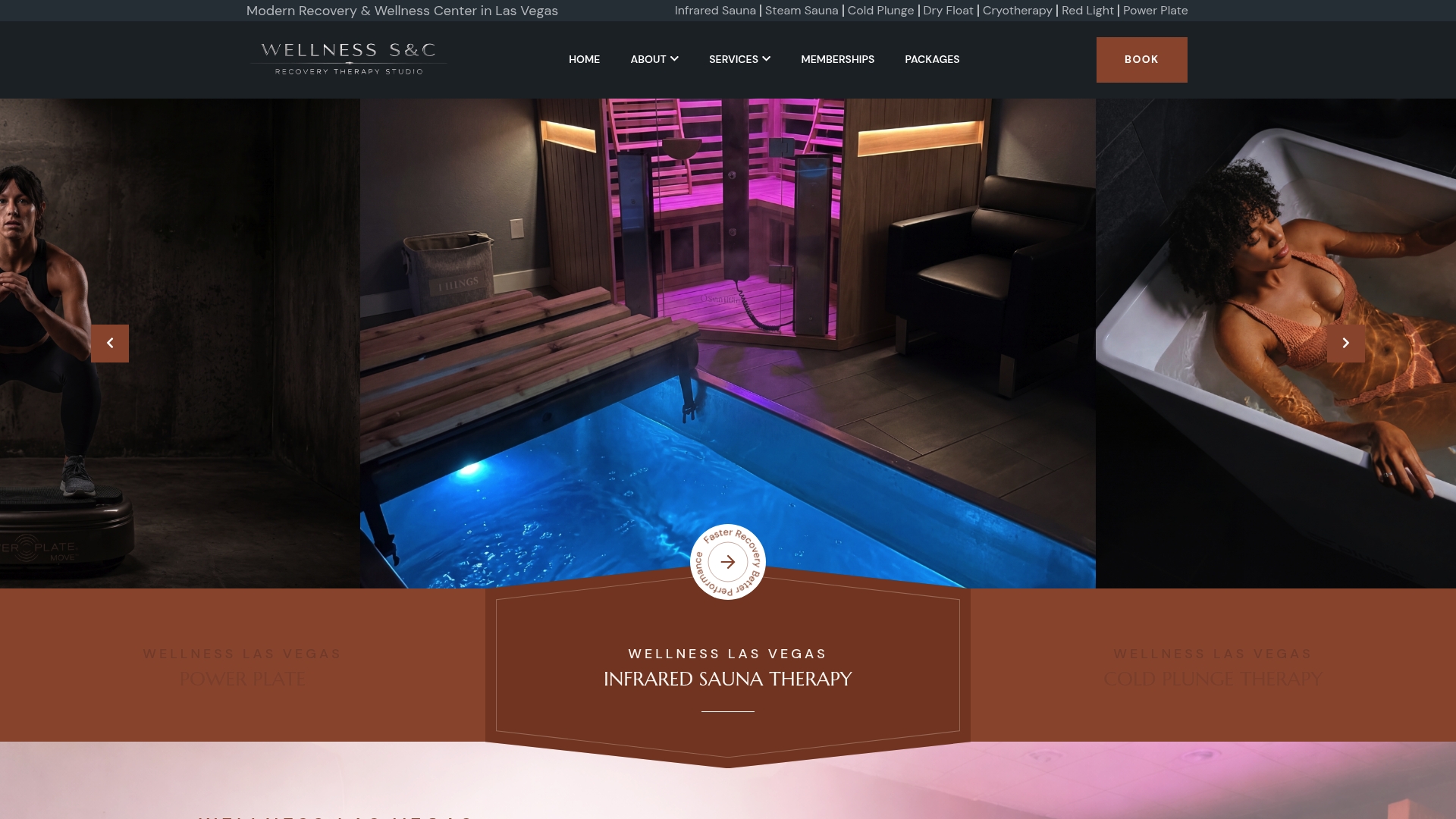
Wellnesslasvegas is a recovery-focused wellness destination built specifically for Las Vegas athletes, professionals, and anyone serious about long-term health. The facility offers infrared sauna therapy, cryotherapy, steam oxygen therapy, cold plunge, red light therapy, dry float therapy, and Power Plate training. Every service is delivered in private rooms with premium equipment and a clean, professional environment.
The focus is on real, measurable results: improved circulation, faster recovery, reduced inflammation, and better stress resilience. Whether you’re coming off a hard training week, managing a demanding schedule, or building a preventative health routine, Wellnesslasvegas has the tools to support it. Visit wellnesslasvegas.net to explore services and book your session.
Wellness facilities deliver the most value when they combine coordinated, multi-modality care with a physical environment designed to support recovery at every stage.
| Point | Details |
|---|---|
| Integrated care model | True wellness centers coordinate care across practitioners, treating root causes rather than isolated symptoms. |
| Session depth matters | Integrative clinics often schedule sessions roughly three times longer than the standard primary care visit of under 16 minutes. |
| Design affects outcomes | Hub-and-spoke facility layouts that separate active and restorative zones improve both comfort and recovery results. |
| Insurance and costs | Many integrative services are paid out of pocket; FSA and HSA accounts are widely accepted at wellness centers. |
| Wellnesslasvegas in Las Vegas | Offers infrared sauna, cryotherapy, cold plunge, red light therapy, and more in private rooms built for performance recovery. |
The seven dimensions of wellness are physical, emotional, social, intellectual, spiritual, environmental, and occupational. Most wellness facilities address several of these simultaneously through their service mix.
Wellness centers range from medically integrated facilities combining fitness, clinical care, and spa services to recovery-focused studios offering infrared sauna, cryotherapy, and red light therapy. Wellnesslasvegas in Las Vegas is an example of the latter.
Coverage depends on the specific service. Chiropractic care, acupuncture, and physical therapy are sometimes covered by insurance, while many integrative and recovery therapies are paid out of pocket or through FSA and HSA accounts.
Costs vary widely based on services and frequency; facilities may offer packages to reduce per-session costs.

