- Infrared Sauna Las Vegas | Cold Plunge & Cryotherapy

Muscle rejuvenation is defined as the biological process by which damaged muscle fibers repair, regenerate, and strengthen after exercise or injury through satellite cell activation and energy store restoration. This process is not passive rest. It is a coordinated sequence of cellular cleanup, stem cell recruitment, protein synthesis, and tissue remodeling that determines how fast and how fully you recover. For athletes and active adults in Las Vegas, understanding muscle rejuvenation means you can make smarter choices about nutrition, sleep, and recovery therapies. The result is faster strength gains, fewer injuries, and better long-term performance.
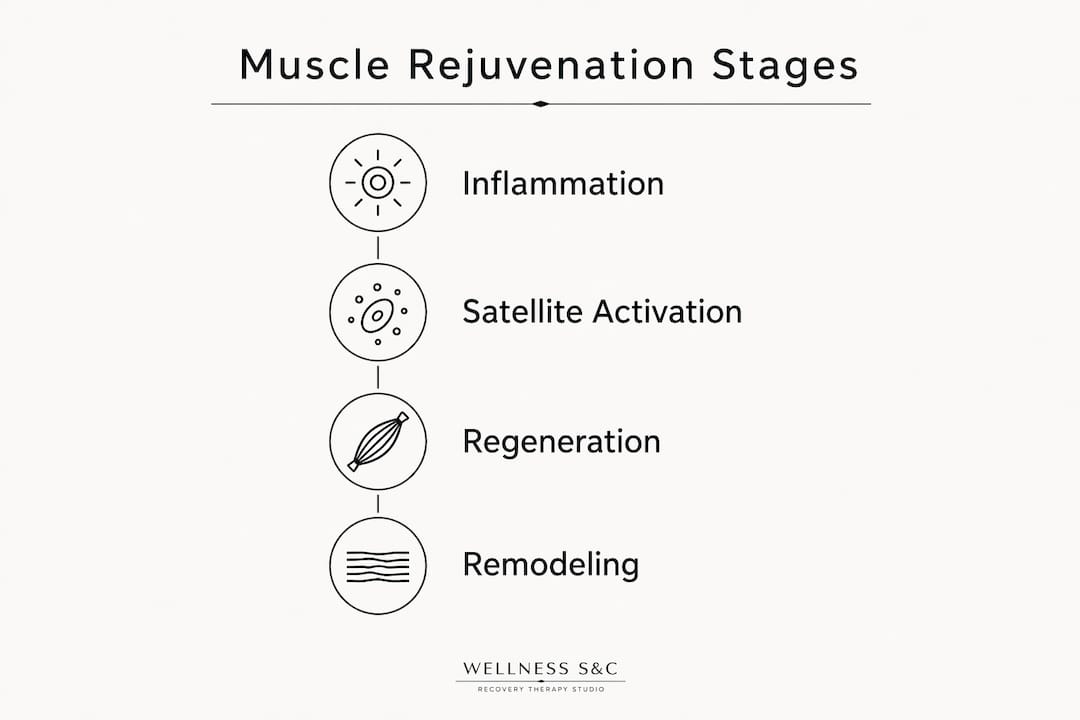
Muscle rejuvenation is the industry term for what exercise science calls skeletal muscle repair and regeneration. Both phrases describe the same process, but rejuvenation emphasizes the restoration of full function rather than just the closure of a wound. Muscle healing unfolds in phases: inflammation, stem cell activation, regeneration, and remodeling. Each phase builds on the last, and skipping support for any one of them slows the entire sequence.
The process begins the moment you finish a hard training session or sustain a muscle strain. Your body immediately dispatches macrophages to clear debris from torn fibers, then signals dormant satellite cells to wake up and multiply. Those satellite cells fuse with damaged tissue to form new muscle fibers, which the body then remodels into stronger, denser structures over days and weeks. Muscle recovery is an active biochemical process, not a waiting game.
Muscle repair follows four distinct stages, each with a specific biological job.
Inflammation. Within hours of damage, the immune system sends macrophages to the injury site. These cells consume cellular debris and release chemical signals that recruit repair cells. This stage feels uncomfortable, but it is necessary. Suppressing it too aggressively with anti-inflammatory drugs can actually delay full recovery.
Satellite cell activation. Muscle stem cells, called satellite cells, sit dormant along muscle fibers until damage signals wake them. They then multiply rapidly and migrate to the injury site. This is the most critical stage for long-term strength gains.
Regeneration. Activated satellite cells fuse with damaged fibers or with each other to form new myofibers. Satellite cells multiply and fuse with damaged tissue, laying down the structural foundation for rebuilt muscle.
Remodeling. Over days to weeks, connective tissue reorganizes and the new fibers mature. The muscle becomes denser and more resistant to future damage. This is the stage where strength and coordination actually improve.
One common misconception worth clearing up: DOMS is primarily due to microscopic fiber disruption and localized inflammation, not lactic acid buildup. That soreness you feel 24–48 hours after a hard workout is your repair machinery running at full speed.
Pro Tip: Gentle movement on rest days, like walking or light stretching, increases blood flow to remodeling tissue without disrupting the repair sequence. It is one of the most underused recovery tools available.
Nutrition is not a supplement to muscle repair. It is the raw material the entire process runs on. Glycogen synthase activity peaks in a post-exercise metabolic window, meaning your muscles are primed to absorb carbohydrates and restore energy stores faster right after training than at any other time. Missing that window does not ruin your recovery, but it does slow it.
Key nutritional factors that directly support muscle rejuvenation include:
Pro Tip: Do not skip carbohydrates after strength training in an effort to stay lean. Glycogen restoration and fat loss are not mutually exclusive. Carbohydrates consumed within the metabolic window are prioritized for muscle glycogen, not fat storage.
Aging does not just slow muscle repair. It changes the biology of repair at the cellular level. Aging slows muscle recovery due to reduced vascular supply, tendon stiffness, and a measurable decline in satellite cell activity. The result is smaller fibers, reduced strength, and a longer recovery timeline after even moderate exercise.
The most significant molecular finding in recent research involves the GLS1 protein. Aged stem cells had 50% lower GLS1 levels compared to younger cells. When researchers restored GLS1 function in aged muscle stem cells, the resulting muscle fibers were roughly 45% larger, and subjects showed measurable improvements in movement and balance. That finding reframes aging muscle decline as a metabolic problem with a potential solution, not an inevitable endpoint.
| Age-related change | Effect on muscle repair | Intervention |
|---|---|---|
| Reduced satellite cell activity | Slower fiber regeneration | Resistance training, red light therapy |
| Lower GLS1 protein levels | Impaired stem cell metabolism | Dietary glutamine, protein timing |
| Decreased vascular supply | Slower nutrient delivery | Heat therapy, infrared sauna |
| Increased inflammatory load | Prolonged inflammation phase | Anti-inflammatory nutrition, cold plunge |
One of the most promising emerging interventions is low-intensity pulsed ultrasound (LIPUS), applied noninvasively to the abdomen. Research shows it rejuvenates aged muscle by modulating gut microbiota, significantly increasing grip strength and muscle mass. The mechanism is indirect but powerful: LIPUS enriches anti-inflammatory microbial taxa in the gut, which then reduce systemic inflammation and support the muscle repair environment. Photobiomodulation therapies like red light work through a more direct pathway, improving circulation and reducing oxidative stress in muscle tissue to accelerate natural regenerative activity.
The most effective recovery methods work by supporting one or more of the four biological repair stages. Choosing the right combination depends on your training intensity, age, and recovery timeline.
Knowing the biology of muscle rejuvenation changes how you train, not just how you recover. The most common training mistake is not overtraining itself. It is returning to full intensity before the remodeling phase is complete. That cuts the repair cycle short and produces fibers that are weaker, not stronger, than before the workout.
Recognizing the signs of incomplete recovery is the first practical skill this knowledge gives you. Persistent soreness beyond 72 hours, declining performance across consecutive sessions, and disrupted sleep are all signals that your repair machinery is overloaded. Adjusting training load in response to those signals is not weakness. It is precision.
“Muscle rejuvenation is not a passive process you wait through. It is an active biological program you either support or undermine with every decision you make between workouts. The athletes who recover fastest are not the ones who rest the most. They are the ones who feed, sleep, and treat their recovery with the same intention they bring to training.”
Using muscle repair knowledge also improves injury prevention. Tendons and connective tissue remodel more slowly than muscle fibers. Increasing training load before connective tissue has fully adapted is the primary cause of overuse injuries in active adults. Respecting that timeline, especially for runners and weightlifters, reduces injury risk more reliably than any single supplement or therapy.
Muscle rejuvenation is a four-stage biological process requiring targeted nutrition, adequate sleep, and strategic recovery therapies to reach its full potential.
| Point | Details |
|---|---|
| Four-stage repair process | Inflammation, satellite cell activation, regeneration, and remodeling each require specific support. |
| Protein timing over 24 hours | Spreading 20–40g of protein every 3–4 hours post-exercise outperforms a single post-workout dose. |
| Aging reduces GLS1 levels | Aged muscle stem cells show 50% lower GLS1, but targeted interventions can restore repair capacity. |
| Advanced therapies accelerate repair | Red light therapy and LIPUS improve circulation and reduce oxidative stress to speed regeneration. |
| Sleep is non-negotiable | Deep sleep triggers hormonal release that directly drives muscle fiber repair and remodeling. |
Most people treat recovery as the absence of training. That framing is the root of most recovery mistakes I see. Muscle rejuvenation is a metabolically expensive, time-sensitive biological program. It needs fuel, hormonal support, and in many cases, targeted therapy to run efficiently.
The research on GLS1 protein and aging muscle stem cells genuinely shifted how I think about recovery for people over 40. The decline in repair capacity is not just about getting older. It is about specific molecular changes that respond to specific interventions. That is encouraging, not discouraging. It means there are real levers you can pull.
What I find most overlooked in Las Vegas wellness conversations is the gut-muscle connection. The LIPUS research showing that modulating gut microbiota can significantly increase grip strength and muscle mass in aged subjects is the kind of finding that should change how we think about whole-body recovery. Your gut health is your muscle health. That connection deserves far more attention than it currently gets.
The therapies gaining real traction here in Las Vegas, including infrared sauna, red light therapy, and contrast therapy, are not trends. They are evidence-backed tools that address the vascular, inflammatory, and cellular mechanisms that slow repair. The key is using them consistently and in combination with sound nutrition and sleep, not as substitutes for those fundamentals. For a deeper look at how these methods fit together, the science-backed recovery strategies guide at Wellnesslasvegas is worth your time.
— Argjenta
Wellnesslasvegas offers a full range of therapies designed to support every stage of muscle repair, from acute inflammation management to long-term tissue remodeling.

The facility’s infrared sauna in Las Vegas increases deep tissue circulation and supports the vascular delivery that aging muscles need most. Red light therapy sessions target oxidative stress and accelerate the regenerative pathways that intense training can overwhelm. Cold plunge and contrast therapy reduce inflammation and clear metabolic waste between sessions. Each service is available in private rooms with professional guidance, so you can build a recovery plan that fits your training schedule and goals. Whether you are an athlete managing a heavy training block or an active adult focused on longevity, Wellnesslasvegas has the tools to support your muscle health.
Muscle rejuvenation is the process by which your body repairs damaged muscle fibers, restores energy stores, and rebuilds tissue stronger than before through satellite cell activation and coordinated remodeling.
The full repair and remodeling cycle typically spans 48–72 hours for moderate exercise, though intense training or age-related decline can extend that timeline significantly.
Red light therapy improves circulation and reduces oxidative stress in muscle tissue, accelerating natural regenerative pathways. Research supports its use for both aging muscles and recovery from intense training.
Aging reduces satellite cell activity, lowers GLS1 protein levels in muscle stem cells, and decreases vascular supply to repairing tissue. These changes slow every stage of the repair process but respond to targeted interventions like resistance training, proper nutrition, and therapies like red light and LIPUS.
Consistent protein intake distributed every 3–4 hours over the 24 hours following exercise produces better repair outcomes than timing alone. Pairing protein with carbohydrates in the post-exercise metabolic window also accelerates glycogen restoration.

