- Infrared Sauna Las Vegas | Cold Plunge & Cryotherapy

Infrared pain relief is defined as the therapeutic use of specific light wavelengths to penetrate soft tissue, reduce inflammation, and modulate pain signals at the cellular level. The clinical term for this process is photobiomodulation, and it describes how infrared energy triggers real physiological changes rather than simply warming the skin. Research shows infrared light therapy can reduce pain intensity by up to 60%, with relief lasting hours after a single session. For people in Las Vegas managing chronic pain, arthritis, fibromyalgia, or sciatica, understanding how this therapy works is the first step toward using it effectively. Wellnesslasvegas offers infrared sauna sessions designed around these exact mechanisms, giving you access to professional-grade therapy without guesswork.

Infrared therapy reduces pain through four primary mechanisms: vasodilation, increased blood flow, suppression of pro-inflammatory cytokines, and activation of heat shock proteins. Each of these processes works together to create both immediate and lasting relief. Vasodilation widens blood vessels, which delivers more oxygen and nutrients to damaged or inflamed tissue. That increased circulation accelerates the natural repair process your body already uses.
The suppression of pro-inflammatory cytokines is particularly significant for chronic pain sufferers. Cytokines are chemical messengers that drive inflammation. When infrared energy reduces their activity, the inflammatory cycle that keeps pain going starts to break down. Infrared therapy also promotes macrophage polarization toward an anti-inflammatory state, meaning your immune cells shift from attacking tissue to repairing it.
Clinical data backs these mechanisms clearly. In one study on TMJ disorder patients, participants reported a 35-point reduction on a 100-point pain scale after infrared light therapy. That is not a marginal improvement. It represents a meaningful shift in daily function and quality of life.
Key physiological effects of infrared therapy include:
These are not theoretical effects. They are measurable, documented responses that explain why people with musculoskeletal pain consistently report relief after infrared sessions.
Infrared therapy produces the strongest results for conditions rooted in chronic inflammation, poor circulation, and deep tissue tension. The conditions with the most clinical support include chronic low back pain, arthritis, fibromyalgia, muscle soreness, and joint stiffness. Sciatica relief through infrared sauna is also well-documented, as the deep heat reduces nerve compression by relaxing surrounding muscle tissue.
Fibromyalgia patients show particularly striking results. One study of 13 female fibromyalgia patients found roughly 50% pain reduction after the first far-infrared sauna session, with improvements sustaining over several months. That kind of sustained response is rare in pain management, and it points to infrared therapy’s ability to address the underlying inflammation rather than just masking symptoms.
Conditions that respond well to infrared therapy:
Infrared therapy is less effective for acute injuries with active swelling, nerve damage from structural compression, or pain caused by infection. For those conditions, infrared heat can worsen inflammation or delay proper treatment. The therapy works best when the pain source is chronic, diffuse, and inflammation-driven rather than acute and structural.
Pro Tip: If you are unsure whether your condition is a good fit, consult a physical therapist before starting infrared sessions. Pairing infrared therapy with physical therapy exercises gives you the best chance of lasting improvement.
Effective infrared sauna use follows a clear protocol. Standard sessions start at 15–20 minutes at temperatures between 110°F and 130°F, repeated 3–5 times per week. That frequency matters because infrared therapy benefits are cumulative. One session gives temporary relief. Consistent sessions over 2–3 weeks produce significant functional improvement.
Follow these steps to get the most from each session:
Safety is non-negotiable. Infrared saunas emit electromagnetic fields that require caution for anyone with a pacemaker or implanted medical device. Always verify safety with your physician before starting. People undergoing photosensitizing treatments or managing active skin diseases should also avoid infrared exposure until cleared by a healthcare provider.
Wellnesslasvegas structures its infrared sauna sessions around these exact protocols, with private rooms and professional guidance to help you progress safely. Las Vegas’s dry climate means you may sweat more than expected, so extra hydration is especially important here.
Pro Tip: Pair your infrared sessions with red light therapy for pain on alternating days. The two modalities target different tissue depths and complement each other well for chronic pain management.
The three main infrared modalities differ in wavelength, tissue penetration, and therapeutic target. Choosing the right one depends on where your pain originates and how deep the affected tissue sits.
| Modality | Wavelength Range | Penetration Depth | Best For |
|---|---|---|---|
| Near-infrared (NIR) | 810–850 nm | Deep tissue, joints, muscle | Joint pain, muscle injury, deep inflammation |
| Far-infrared (FIR) | 3,000–100,000 nm | Surface and systemic | Full-body relaxation, fibromyalgia, systemic wellness |
| Red light therapy | 630–700 nm | Skin and superficial tissue | Surface inflammation, wound healing, nerve pain |
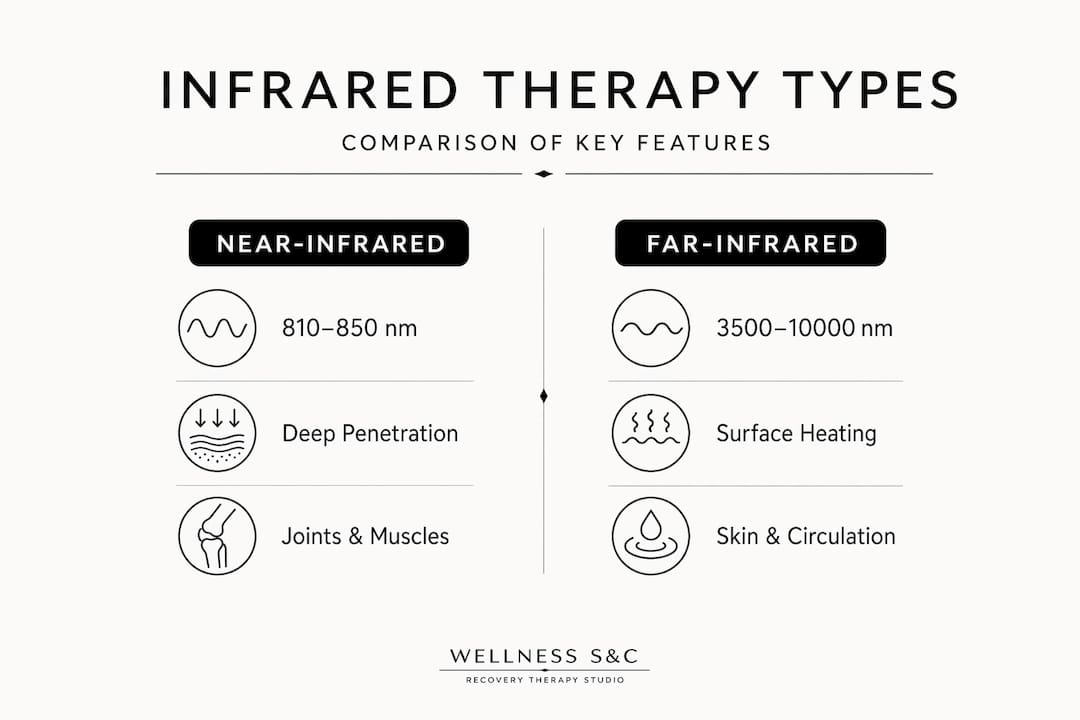
Near-infrared at 810–850 nm penetrates deepest, reaching joints, tendons, and muscle bellies. This makes it the preferred choice for sciatica, arthritis, and post-injury recovery. Far-infrared does not penetrate as deeply, but it heats the body from within, producing the systemic warmth and sweating associated with traditional infrared sauna use. That systemic effect is what makes far-infrared particularly effective for fibromyalgia and chronic fatigue-related pain.
Red light therapy for pain operates at the shortest wavelengths and targets surface tissue. It works well for nerve sensitivity, skin-level inflammation, and superficial muscle soreness. Many people use it alongside far-infrared sauna sessions for a layered approach to pain management. The science behind red light therapy shows it activates mitochondrial function in cells, which speeds tissue repair at the surface level.
One important clarification: detoxification claims around infrared saunas lack strong clinical support. The documented benefits are pain reduction, improved circulation, and muscle relaxation. That is still a powerful therapeutic profile. You do not need inflated claims to justify using infrared therapy. The evidence for what it actually does is strong enough on its own.
For a deeper look at how these modalities compare in a recovery context, the infrared sauna benefits guide at Wellnesslasvegas breaks down session outcomes for different pain profiles.
Infrared therapy reduces chronic pain through vasodilation, cytokine suppression, and heat shock protein activation, with consistent sessions of 3–5 times weekly producing the most sustained relief.
| Point | Details |
|---|---|
| Pain reduction is real and measurable | Clinical studies show up to 60% pain intensity reduction with infrared light therapy. |
| Consistency drives results | Significant improvement requires 3–5 sessions per week over at least 2–3 weeks. |
| Modality choice matters | Near-infrared suits deep tissue pain; far-infrared works best for systemic and fibromyalgia-related pain. |
| Safety precautions are non-negotiable | Avoid infrared therapy during acute flares and consult a physician if you have implanted devices. |
| Combine therapies for best outcomes | Pairing infrared with physical therapy and red light therapy produces better results than infrared alone. |
Most people come to infrared therapy with one of two mindsets. Either they expect it to fix everything in two sessions, or they dismiss it entirely because it sounds too passive to work. Both positions miss the point.
The research is clear that infrared therapy works best as a complement to physical therapy and medical care, not as a replacement. People who treat it as their entire pain management strategy tend to plateau quickly. People who use it alongside movement, proper sleep, and medical guidance see the most sustained improvement.
The cumulative nature of the therapy is the part most people underestimate. You will not feel dramatically different after session one. You might feel slightly looser, a little calmer, maybe less stiff the next morning. The real shift happens around week three or four, when the anti-inflammatory effects have had time to build. That is when people start reporting that they are sleeping better, moving more freely, and reaching for pain medication less often.
One thing I want to be direct about: infrared therapy is not a miracle cure. If you have structural nerve compression, a herniated disc pressing on a nerve root, or an autoimmune condition in an active flare, infrared heat will not resolve those issues. What it will do is reduce the surrounding inflammation, improve tissue circulation, and give your body a better environment for healing. That is genuinely valuable. Just keep your expectations grounded in what the therapy actually does.
For Las Vegas residents, the dry desert climate adds one more variable. You will sweat more than you expect, even at lower temperatures. Start conservatively, drink more water than you think you need, and give your body time to adapt. The non-invasive approach to pain relief that infrared therapy represents is worth the patience it requires.
— Argjenta
Wellnesslasvegas offers infrared sauna sessions in Las Vegas designed specifically for chronic pain management, athletic recovery, and long-term wellness. Each session takes place in a private room with professional-grade equipment calibrated to therapeutic temperature ranges.
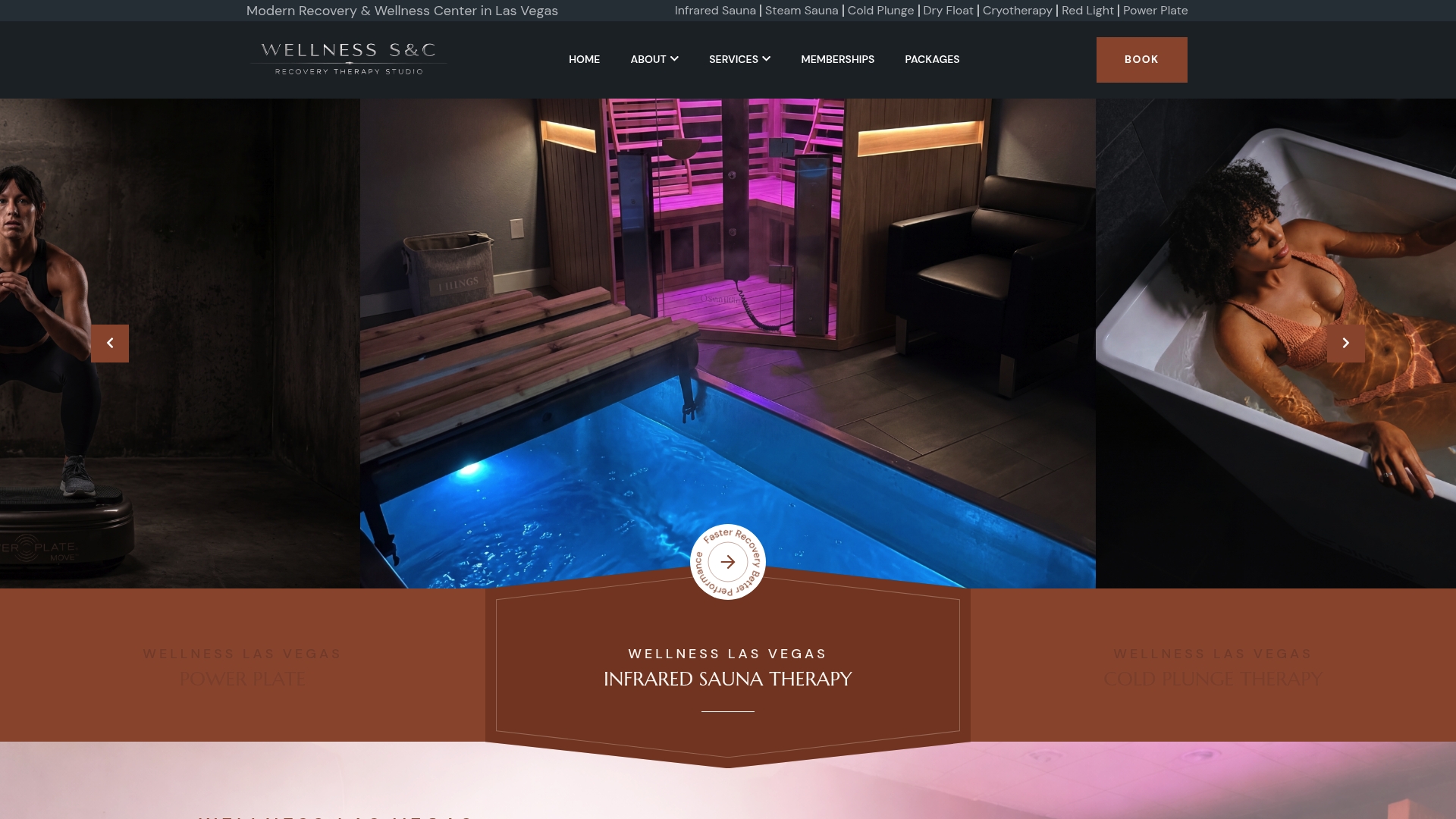
Beyond infrared sauna, Wellnesslasvegas also provides red light therapy in Las Vegas for people who want to layer surface-level photobiomodulation with their sauna sessions. For those exploring contrast recovery, cold plunge therapy is available as a complement to heat-based treatments. Whether you are managing sciatica, fibromyalgia, or post-workout soreness, the team at Wellnesslasvegas can help you build a session plan that fits your pain profile and your schedule.
Some people notice reduced stiffness and mild pain relief after a single session. Sustained, meaningful improvement typically requires consistent use over 2–3 weeks at a frequency of 3–5 sessions per week.
Infrared sauna is generally safe for sciatica and can reduce muscle tension around the sciatic nerve pathway. Avoid sessions during acute flares, and consult your physician if you have structural nerve compression requiring medical treatment.
Red light therapy targets surface tissue at 630–700 nm wavelengths, while far-infrared sauna heats the body systemically at much longer wavelengths. Near-infrared penetrates deepest and is best for joint and muscle pain.
Infrared therapy is a complementary treatment, not a replacement for prescribed medication or medical care. Clinical evidence supports it as a tool to reduce pain intensity and improve function alongside conventional treatment.
People with implanted medical devices, those undergoing photosensitizing treatments, and anyone experiencing an active inflammatory flare should avoid infrared sauna until cleared by a healthcare provider.

