- Infrared Sauna Las Vegas | Cold Plunge & Cryotherapy

Guided wellness is defined as a structured, professionally supported approach to health that uses personalized strategies, expert oversight, and evidence-based techniques to help individuals build lasting habits around recovery, stress reduction, and overall well-being. Unlike generic health advice you find on social media, guided wellness programs pair you with certified coaches, physicians, or technology-assisted tools that adapt to your specific goals and setbacks. The result is a clear, personalized path forward rather than a pile of conflicting recommendations. Whether you are an athlete in Las Vegas recovering from training or a busy professional managing chronic stress, this approach removes the guesswork and replaces it with a plan that actually fits your life.
Guided wellness is the practice of improving your health through a structured program that includes professional support, measurable milestones, and personalized feedback. The industry term most commonly used alongside this concept is personalized wellness, and both refer to the same core principle: your health plan should be built around you, not a generic template.
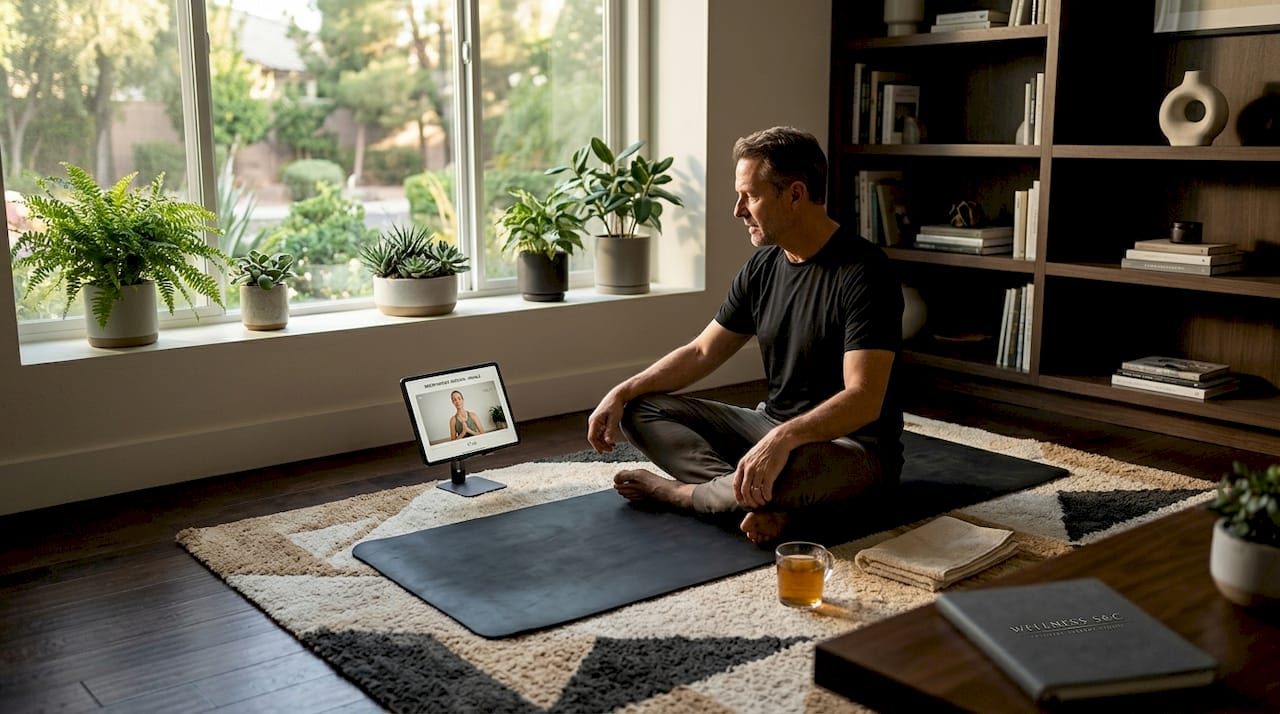
Guided wellness programs typically last between 14 and 90 days and include video lessons, coaching sessions, app-based tracking, and sometimes metabolic health monitoring. That range matters because it reflects how deeply these programs can go. A 14-day program might focus on sleep and hydration habits, while a 90-day program could address cardiovascular health, stress resilience, and body composition simultaneously.
A well-designed program generally includes several core components:
For example, a 28-day cardiovascular wellness program built around the American Heart Association’s Life’s Essential 8™ framework uses daily lessons paired with blood pressure tracking, hydration prompts, and meal preparation tasks. That combination of education and small daily actions is what separates guided programs from passive health content.
Pro Tip: When evaluating a guided wellness program, look for one that includes a money-back guarantee or performance incentive. Programs confident enough to offer those terms are typically built on stronger evidence and more accountable coaching structures.
The core difference between guided and self-directed wellness is accountability and adaptation. When you manage your own wellness without support, you rely entirely on personal motivation and your ability to interpret health information correctly. Both are notoriously unreliable over time.
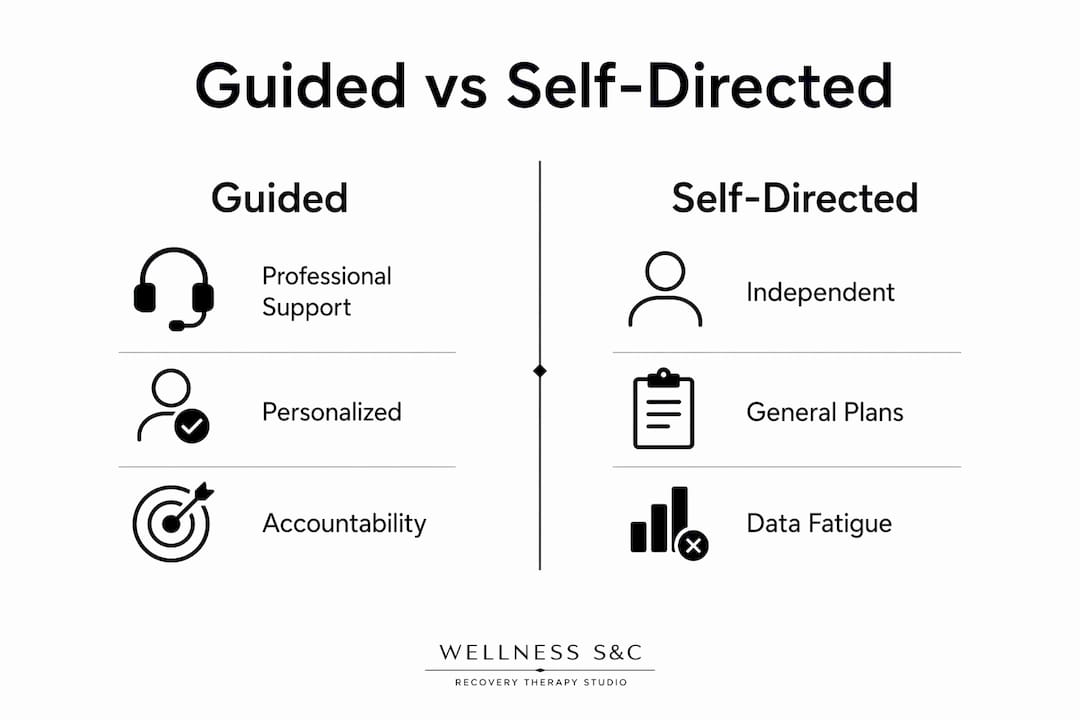
Professional oversight makes guided wellness 30 to 40 percent more effective at creating long-term behavior change than self-directed approaches. That gap exists because certified guides and physicians can identify when a plan is not working and adjust it before you give up entirely.
| Factor | Guided wellness | Self-directed wellness |
|---|---|---|
| Personalization | Tailored to your biometrics and goals | Based on general advice |
| Accountability | Coach or physician check-ins | Self-monitored |
| Adaptation | Expert adjusts plan as you progress | You must identify and fix problems alone |
| Adherence rate | 30 to 40% higher long-term | Lower due to trial-and-error fatigue |
| Sustainability | Built-in integration strategies | Dependent on personal discipline |
“The key role of guided wellness is shifting users from passive recipients of generic advice to active participants informed by a personalized map that adapts to setbacks and progress.” — Corporate Wellness Magazine
Self-directed wellness often leads to what practitioners call data fatigue. You track everything, see numbers change, but have no framework for interpreting what those changes mean. A guided approach converts data into action by focusing on critical health signals like blood pressure and stress markers to build sustainable habits. That focus is what keeps people moving forward instead of burning out on spreadsheets and fitness apps.
Guided wellness draws from a wide range of techniques depending on your goals. For stress relief and mental recovery, the most widely used methods include guided imagery, breathwork, mindfulness meditation, and movement-based practices. For physical recovery, modalities like infrared sauna therapy, cryotherapy, contrast therapy, and red light therapy are increasingly integrated into structured programs.
Here is how these techniques typically work within a guided wellness framework:
Guided imagery and visualization. Guided imagery uses directed mental images to promote positive emotional and physical states, reducing stress and improving sleep quality. A practitioner or audio guide walks you through a calming scenario while your nervous system responds as if the experience is real.
Breathwork and mindfulness. Structured breathing protocols like box breathing or 4-7-8 breathing activate the parasympathetic nervous system within minutes. When paired with a certified guide, these techniques become far more consistent and effective than self-practice.
Movement and somatic practices. Yoga, tai chi, and Power Plate training are used in guided programs to address both physical tension and emotional stress stored in the body. These are not casual stretching sessions. They are deliberate, sequenced practices with measurable outcomes.
Technology-assisted check-ins. AI companions and structured daily check-ins maintain engagement throughout a program and help identify patterns in mood, energy, and recovery that a person might miss on their own.
Thermal and contrast therapies. Infrared sauna sessions raise core body temperature to support detoxification and circulation. Cryotherapy and cold plunge therapy trigger the body’s natural anti-inflammatory response. When used together as contrast therapy, these modalities accelerate muscle recovery and reduce cortisol levels measurably.
In corporate and team settings, guided wellness integrates meditation, micro-breaks, virtual coaching, and resilience training to combat burnout. That breadth shows how adaptable the guided model is across different environments and goals.
Starting a guided wellness practice in Las Vegas is more accessible in 2026 than it has ever been. The city has a growing network of recovery-focused facilities, certified wellness coaches, and personalized health programs that go well beyond the typical gym membership.
Here is a practical framework for getting started:
When wellness programs balance novelty with reflection practices like journaling or discussing experiences, participants see greater long-term benefits. Novel experiences stimulate the brain’s frontal lobes, which are critical for cognitive and emotional change. That is why a well-designed personalized wellness process rotates techniques while keeping core habits stable.
Pro Tip: Do not try to overhaul your entire routine in week one. Pick one guided technique, practice it daily for two weeks, and measure how it affects your sleep, mood, or recovery before adding anything new. Consistency with one habit beats inconsistency with ten.
For Las Vegas residents focused on recovery and longevity, the Las Vegas wellness guide from Wellnesslasvegas covers local resources for stress relief and long-term health in detail.
Guided wellness works because professional oversight, personalized structure, and consistent feedback produce 30 to 40 percent better long-term outcomes than self-directed approaches.
| Point | Details |
|---|---|
| Core definition | Guided wellness is a structured, expert-supported approach to building lasting health habits. |
| Program structure | Programs run 14 to 90 days and include coaching, tracking, and biometric monitoring. |
| Effectiveness advantage | Professional guidance improves adherence and outcomes by 30 to 40 percent over self-directed methods. |
| Key techniques | Guided imagery, breathwork, thermal therapies, and AI check-ins are the most widely used modalities. |
| Sustainability strategy | Maintaining one or two core habits post-program prevents relapse and sustains long-term results. |
I have spent years watching people cycle through wellness trends, and the pattern is almost always the same. They start with high motivation, overpack their schedule with new habits, hit a wall around week three, and quietly abandon everything. The problem is never willpower. It is cognitive load.
New wellness routines demand more mental energy than most people anticipate. That initial discomfort is not a sign of failure. It is the friction of building a new neural pathway, and it requires persistence over perfection. The people who succeed are almost never the most disciplined. They are the ones with the clearest structure and the most responsive support system.
What I find most underrated about guided wellness is the adaptation piece. A good guide does not just hand you a plan and check in monthly. They listen for what is not working and adjust before you hit a wall. That responsiveness is what a fitness app cannot replicate, and it is the reason guided, intentional approaches reduce burnout and promote sustainability far better than chasing quick fixes.
My honest recommendation: treat your first guided program as a diagnostic, not a destination. You will learn more about how your body responds to stress, sleep, and recovery in 28 structured days than in two years of unguided trial and error. Build a wellness therapy workflow around what you discover, and let that become your long-term foundation.
— Argjenta
Wellnesslasvegas is Las Vegas’s premier recovery and wellness destination, offering science-backed therapies designed to support every stage of a guided wellness program. Whether you are managing stress, accelerating physical recovery, or building a long-term health routine, the facility’s services align directly with what guided wellness programs recommend.
The infrared sauna in Las Vegas at Wellnesslasvegas supports detoxification, circulation, and deep stress relief in private, comfortable rooms. For physical recovery, cryotherapy sessions reduce inflammation and reset the body’s stress response in minutes. Combined with red light therapy, cold plunge, and Power Plate training, these modalities give you a complete recovery toolkit. Book your first session and take the first concrete step toward a wellness plan that is built around your goals.
Guided wellness is a structured health approach where a certified coach, physician, or program provides personalized support, accountability, and techniques to help you reach specific wellness goals. It replaces generic advice with a tailored plan that adapts as you progress.
Guided wellness programs typically run between 14 and 90 days, depending on the goal and format. Shorter programs focus on habit introduction, while longer programs address deeper behavioral and physiological change.
Daily guided wellness practices can include video lessons, app-based check-ins, breathwork, movement sessions, biometric tracking, and recovery therapies like infrared sauna or cryotherapy. The specific mix depends on your program and primary health goal.
Professional oversight makes guided wellness 30 to 40 percent more effective at producing long-term behavior change than self-directed approaches. The accountability and expert adaptation built into guided programs are the primary drivers of that difference.
Start by identifying your primary goal, then choose a certified provider or local wellness facility that offers structured programs and recovery services. Wellnesslasvegas offers infrared sauna, cryotherapy, and personalized recovery sessions that integrate directly with guided wellness goals.

