- Infrared Sauna Las Vegas | Cold Plunge & Cryotherapy

Modern relaxation therapies are structured, evidence-based practices that activate the body’s parasympathetic nervous system to reduce stress, lower cortisol, and support physical and mental recovery. The clinical term for this response is the “relaxation response,” first described by Harvard cardiologist Herbert Benson in the 1970s. Today, the field includes methods ranging from Progressive Muscle Relaxation (PMR) and Mindfulness-Based Stress Reduction (MBSR) to breathwork protocols, sound baths, and sensory reset therapy. For anyone in Las Vegas navigating high-stimulation environments, long work hours, or athletic recovery demands, understanding which therapies work and why is the first step toward real, lasting results.
Modern stress relief methods fall into three broad categories: breath-based techniques, body-focused practices, and sensory or environmental therapies. Each category works through a distinct physiological pathway, and knowing the difference helps you choose the right tool for the right moment.
Breath-based techniques are the fastest-acting options available. Box breathing (inhale 4 counts, hold 4, exhale 4, hold 4), 4-7-8 breathing, and cyclic sighing all shift the nervous system from sympathetic “fight or flight” to parasympathetic “rest and digest” mode. Cyclic sighing practiced daily for just 5 minutes produces measurable mood and anxiety improvements within one month. That result matters because it means you do not need a gym, a therapist, or an appointment to start seeing benefits today.
Body-focused practices work over a longer timeline but produce deeper physiological change. Progressive Muscle Relaxation, developed by Edmund Jacobson, involves deliberately tensing a muscle group for 5 seconds and then releasing it. The contrast between tension and release signals the nervous system to drop its baseline arousal level. PMR practiced 20 minutes a day, five days per week for six months, produces significant cortisol reductions in clinical studies. Yoga practiced at least three times per week also regulates cortisol and improves mood, making it one of the most well-researched movement-based options available.
Sensory and environmental therapies represent the newest category gaining clinical attention. Sound baths using Tibetan singing bowls and gongs reduce tension, anger, and fatigue while lowering blood pressure and heart rate. Sensory reset therapy takes a different approach entirely. Rather than adding a relaxation task, it removes overwhelming stimuli to let the nervous system return to its natural baseline. Dry float therapy and infrared sauna sessions at Las Vegas wellness centers apply this principle directly.
Pro Tip: Start with one breath-based technique before adding body or sensory practices. Layering too many methods at once makes it harder to identify what is actually working for you.
Choosing the right method depends on your goal, your schedule, and how your body responds to stress. The table below summarizes the key differences across the most widely practiced options.
| Therapy | Duration to effect | Primary benefit | Difficulty | Best for |
|---|---|---|---|---|
| Box breathing | Under 2 minutes | Acute stress relief | Low | Beginners, high-pressure moments |
| Progressive Muscle Relaxation | 4 to 6 weeks | Cortisol reduction, sleep | Low to moderate | Chronic stress, tension headaches |
| Yoga (3x weekly) | 6 to 8 weeks | Anxiety, mood, flexibility | Moderate | Active individuals, long-term wellness |
| Mindfulness meditation | 8 weeks (MBSR protocol) | Anxiety, depression, focus | Moderate | Mental health support, daily practice |
| Sound bath | Single session | Tension, blood pressure, fatigue | Very low | Passive recovery, sensory overload |
| Dry float therapy | Single session | Nervous system reset, pain relief | Very low | Athletes, high-stimulation lifestyles |
| Infrared sauna | Cumulative over weeks | Circulation, detox, recovery | Very low | Recovery, longevity, stress relief |
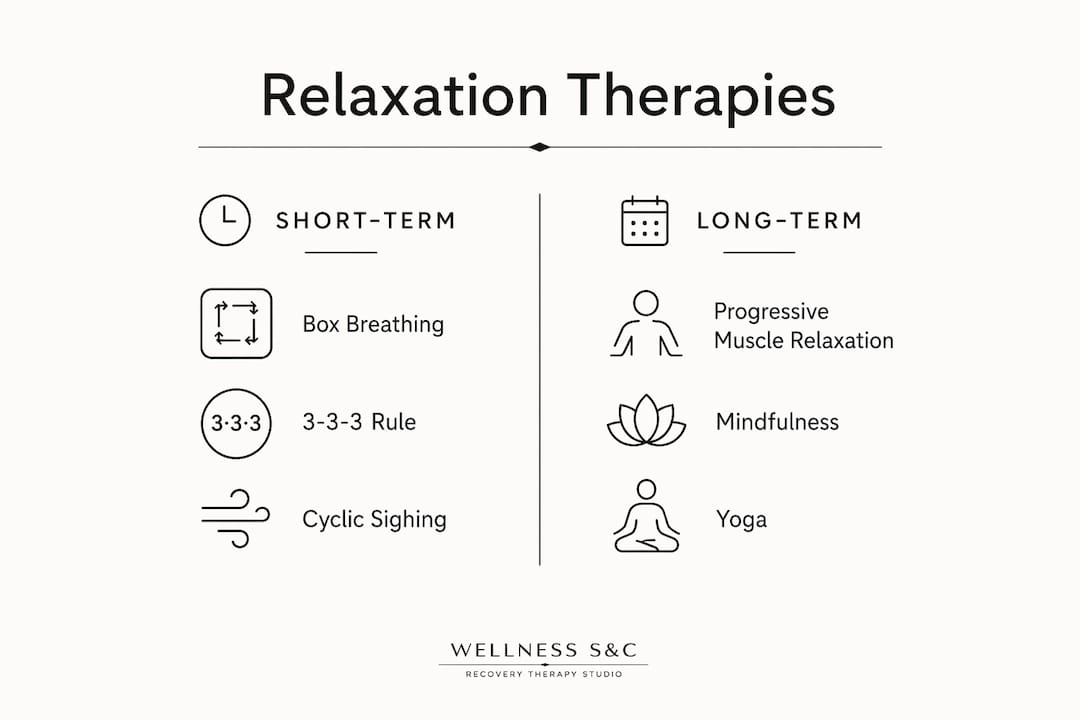
Short-term techniques like box breathing and the 3-3-3 rule are ideal when you need calm within minutes. Longer-term practices like MBSR and yoga require weeks of consistency but produce structural changes in how your nervous system handles stress. Physical movement therapies, including yoga and walking, tend to outperform purely mental focus techniques for people who struggle to sit still. Mindfulness and Cognitive Behavioral Therapy (CBT) show stronger results for individuals dealing with anxiety disorders or depression, particularly in structured group settings.
For Las Vegas residents specifically, the city’s 24-hour pace, high ambient noise, and stimulation-heavy environment make sensory reset therapies especially relevant. Methods that remove input rather than add tasks, such as dry float therapy or infrared sauna, address the root cause of nervous system overload rather than simply managing symptoms.
The science behind relaxation therapy has matured significantly. A meta-analysis of 107 randomized trials involving 23,585 participants confirms that group-based CBT and mindfulness interventions produce the strongest outcomes when sessions run at least 8 weeks and include at least 8 contact hours. Shorter programs show weaker effects. This finding tells you that commitment to duration matters more than the specific technique you choose.
“Consistency in nasal breathing daily is more impactful for calming the nervous system than perfect technique initially.” — Breathwork expert guidance from BBC Future research, 2026
Breathwork research has produced some of the most practical findings in recent years. Cyclic sighing outperforms mindfulness meditation for immediate mood improvement in randomized controlled trial comparisons. Sound bath research involving 62 participants exposed to singing bowls and gongs showed measurable reductions in blood pressure, heart rate, and self-reported tension. These are not placebo effects. They reflect real parasympathetic activation measurable through clinical instruments.
Mind-body therapy research also reveals important modality-specific differences. Yoga excels for anxiety relief, while Qigong shows stronger results for depression and sleep quality. This distinction matters if you are choosing between movement-based options. Matching the therapy to your primary complaint produces better outcomes than picking whatever is most convenient.
Pro Tip: Track your stress level on a simple 1-to-10 scale before and after each session for two weeks. The data you collect will show you which method moves the needle most for your specific nervous system.
Practical guidance from current research points to three principles. First, gentle daily breathwork of 3 to 5 minutes focused on nasal breathing outperforms occasional longer sessions. Second, PMR requires deliberate 5-second tension holds to create the contrast sensation the nervous system needs to reset. Third, mindfulness in clinical therapy works best when integrated with professional guidance rather than practiced in isolation for anxiety disorders.
Building a consistent relaxation practice in Las Vegas does not require a major lifestyle overhaul. Small, repeatable habits compound into significant nervous system change over weeks and months. Here is a practical framework for getting started.
The most common mistake people make is treating relaxation therapy as something to do when they are already overwhelmed. The research is clear: consistent low-dose practice prevents the stress accumulation that leads to burnout, poor sleep, and chronic tension. Start small, stay consistent, and add complexity only when the basics feel automatic.
Modern relaxation therapies work best when matched to your stress type, practiced consistently, and layered progressively from breath-based techniques to body and sensory methods.
| Point | Details |
|---|---|
| Start with breathwork | Cyclic sighing and box breathing deliver measurable calm in under 2 minutes with no equipment. |
| Commit to duration | CBT and mindfulness programs require at least 8 weeks to produce clinically significant anxiety reduction. |
| Match therapy to goal | Yoga targets anxiety best; Qigong improves depression and sleep; PMR reduces chronic cortisol over months. |
| Use sensory reset for overload | Dry float therapy and infrared sauna remove stimuli rather than add tasks, addressing nervous system overload directly. |
| Consistency beats perfection | Daily 3-to-5-minute nasal breathing practice outperforms occasional longer sessions for nervous system regulation. |
By Argjenta
Most people come to relaxation therapy in crisis mode. They have been running on cortisol for months, and they expect a single sound bath or one week of meditation to undo the damage. That is not how nervous system recovery works, and setting that expectation leads to frustration and abandonment.
What I have observed consistently is that beginners overcomplicate breathwork and undervalue passive therapies. They obsess over whether their exhale is exactly twice their inhale, and they miss the point entirely. The nervous system does not respond to perfect ratios. It responds to repetition and safety signals. A simple nasal exhale, done daily, does more than a technically perfect 4-7-8 cycle done twice a month.
Sound baths are another area where I see people get in their own way. The research is clear that passive receptivity is what makes sound therapy work. The moment you start analyzing the tones or wondering if you are “doing it right,” you have exited the parasympathetic state the therapy is designed to create. Let it happen. That is the whole practice.
Las Vegas actually offers a real advantage here. The density of quality wellness facilities means you can access infrared sauna, dry float, red light therapy, and cold plunge within a single visit. The Las Vegas wellness options available today make it easier to combine passive sensory reset with active breathwork in one structured session. That combination is, in my experience, the fastest path from chronic stress to genuine recovery.
Find one method that feels natural, practice it until it is automatic, and then add the next layer. Relaxation is a skill, not a destination.
— Argjenta
Wellnesslasvegas brings the full spectrum of recovery and relaxation therapies together in one Las Vegas facility. Whether you are managing chronic stress, recovering from intense training, or simply prioritizing long-term health, the services here are designed to work with your body’s natural recovery systems. The infrared sauna in Las Vegas promotes deep tissue relaxation, improved circulation, and cortisol reduction through consistent heat exposure. Pair that with a cold plunge session for rapid nervous system regulation, or add red light therapy to support cellular recovery and mood. Every session at Wellnesslasvegas is designed to deliver real, measurable results. Book your personalized wellness plan today and start building the recovery practice your body needs.
Box breathing and cyclic sighing both activate the parasympathetic nervous system in under 2 minutes, making them the fastest evidence-based options for acute stress relief.
Breath-based techniques work within minutes, while practices like PMR and mindfulness require 6 to 8 weeks of consistent use to produce significant cortisol reduction and anxiety improvement.
Group-based CBT and mindfulness interventions reduce anxiety significantly, with the strongest effects seen in programs lasting at least 8 weeks with regular contact hours, according to a meta-analysis of 107 randomized trials.
Yoga is more effective for anxiety, while Qigong shows stronger results for depression and sleep. Both outperform no treatment, and the best choice depends on your primary stress symptom.
Wellnesslasvegas offers infrared sauna, dry float therapy, cold plunge, and red light therapy. These passive sensory therapies complement at-home breathwork and mindfulness practices for a complete stress relief approach.

