- Infrared Sauna Las Vegas | Cold Plunge & Cryotherapy


Most people get sauna frequency wrong. They either go too rarely to see real results or jump in daily before their body is ready. The evidence points to a clear sweet spot: 3–4 sessions per week for most healthy adults, building toward 4–7 sessions weekly for maximum cardiovascular benefit.

Here is what the research actually recommends, organized by where you are and what you want:
Quick-reference frequency guide:
Every frequency tier requires proper hydration. In a dry desert climate like Las Vegas, that means drinking 500 mL water before and after each session, minimum.
The science behind sauna health benefits is more compelling than most people realize. Heat exposure triggers a cascade of physiological responses: blood vessels dilate, heart rate rises, plasma volume expands, and the body releases heat shock proteins that aid cellular repair. These adaptations compound with repeated exposure, which is exactly why frequency drives results.

The most cited evidence comes from the Kuopio Ischemic Heart Disease cohort study, which followed 2,315 Finnish men for over 20 years. The findings revealed a clear dose-response relationship between sauna frequency and health outcomes. Going from one session per week to multiple sessions per week was associated with lower risks of mortality in observational data.
Session duration may influence benefits, with longer sessions showing more favorable outcomes, though the exact percentages reflect findings from specific cohort studies and should be interpreted cautiously given observational design limitations. That combination of frequency and duration is what separates occasional sauna use from a genuine health practice.
Beyond cardiovascular effects, sauna benefits extend to lung function improvements, pain relief for chronic conditions, and mental health support. A comprehensive review published in PMC found that reaping optimal benefits requires 3–7 sessions per week, each lasting approximately 15–20 minutes. Consistency is the mechanism. Sporadic sessions produce sporadic results.
One important caveat: Harvard Health notes that frequent sauna users often have healthier lifestyles overall, which complicates direct causal claims. The associations are strong, but lifestyle factors likely play a role alongside the heat exposure itself.
Your experience level determines how much heat stress your body can safely handle. Rushing this process leads to dizziness, fatigue, and a bad experience that puts you off sauna use entirely. The adaptation timeline is real, and skipping it costs you more than it saves.
Start at 1–2 sessions per week, 5–10 minutes per session, at 160–175°F. Your cardiovascular system, sweat response, and thermoregulatory pathways all need time to adapt. Jumping straight to 20-minute sessions because it “feels fine” is how you end up with orthostatic hypotension when you stand up too fast.
Progress to 2–4 sessions per week, 15–20 minutes per session, at 175–195°F. This is where cortisol reductions and recovery benefits become measurable. The 2–3x per week group in the Laukkanen 2015 data showed a meaningful reduction in cardiovascular mortality compared to once-weekly users.
At 4–7 sessions per week, 20–30 minutes per session, up to 195–212°F, you reach the peak dose-response benefits from the Finnish cohort data. Getting here takes deliberate, patient progression over months.
Pro Tip: Follow the 4-week rule: hold any new frequency level for at least four weeks before adding sessions. This reflects the actual time your cardiovascular and thermoregulatory systems need to adapt, not a conservative guess.
The right session frequency depends heavily on what you are trying to achieve. A Las Vegas athlete recovering from training has different needs than a professional managing chronic stress. Here is how to match your weekly schedule to your actual goal.
The strongest evidence points to 4–7 sessions per week at 175–195°F for 15–20 minutes as the target for heart health. This mirrors the protocol associated with the lowest cardiovascular risk categories in the Kuopio study. Even 2–3 sessions per week showed meaningful reductions compared to once-weekly use, so any consistent routine beats none.
Athletes benefit most from 3–5 sessions weekly timed after workouts, not before. Pre-workout sauna raises core temperature and increases fatigue, which hurts performance. Post-workout, elevated heart rate and blood flow complement what your body is already doing. Session duration matters more than raw frequency here: 20 minutes at 175–190°F produces stronger heat shock protein induction than 10 minutes at the same temperature. For Las Vegas athletes, pairing sauna with cold plunge recovery adds a contrast therapy layer that accelerates muscle repair.
2–4 evening sessions per week improve sleep quality when sessions end 1–2 hours before bedtime. The mechanism is straightforward: your core temperature rises during the session, then drops rapidly afterward, signaling your body that it is time to sleep. This mirrors the natural circadian temperature drop that precedes sleep onset. If you want clinical support for sleep alongside your sauna routine, sleep prescription programs can complement the physiological benefits sauna already provides.
2–4 sessions per week sustain neurochemical benefits for mood, with emerging clinical evidence supporting sauna as an adjunct therapy for depression and anxiety. The Cleveland Clinic notes that sauna’s calming, meditative environment helps reduce anxiety and improve sleep quality. For stress relief specifically, even one session per week provides a meaningful reset. Consistency amplifies the effect over time.
Three to five sessions per week is the practical target. Sauna-induced sweating is significantly heavier than exercise-induced sweating due to sustained high temperatures. Regular moderate sessions produce better cumulative results than occasional long ones. Pair each session with proper electrolyte management, not just water, to support the detox process safely.
Goal-based frequency summary:
| Goal | Frequency | Session length | Key timing note |
|---|---|---|---|
| General health | 2–3x per week | 15–20 min | Any time of day |
| Cardiovascular health | 4–7x per week | 15–20 min | Consistent schedule |
| Athletic recovery | 3–5x per week | 10–20 min | After workouts only |
| Sleep improvement | 2–4x per week | 15–20 min | End 1–2 hrs before bed |
| Stress relief | 1–3x per week | 10–20 min | As needed |
| Mental wellness | 2–4x per week | 15–20 min | Regular schedule |
| Detoxification | 3–5x per week | 15–20 min | Consistent sessions |
Frequency decisions are not just about goals. Your health status, hydration habits, and local environment all shape what is safe for you.
Certain conditions require a doctor’s clearance before starting any sauna routine:
Harvard Health advises that people with low blood pressure or certain heart conditions start with just five minutes and pay close attention to symptoms. Leave immediately if you feel extremely hot, lightheaded, or dizzy.
Dehydration is the most common risk in sauna use, and it compounds with frequency. The minimum standard is 500 mL of water before each session and 500 mL after. At higher frequencies, electrolyte replacement becomes necessary, not optional.
Las Vegas presents a specific challenge. The desert heat outside means your body is already working harder to regulate temperature before you even step into a sauna. Las Vegas’s dry climate intensifies dehydration risk during sauna use, requiring tailored safety advice including gradual cooling and electrolyte management. On days when outdoor temperatures exceed 100°F, reduce session duration and increase hydration intake accordingly.
Exit the sauna and rest if you experience:
Pro Tip: Never go straight from a hot sauna into cold outdoor air in winter, or from a sauna into intense physical activity. Cool down gradually with a lukewarm shower first, then progress to cooler temperatures. This prevents the blood pressure drop that causes most sauna-related incidents.
The research gives you a target range. Your body tells you where within that range you actually belong. These two inputs together produce a sustainable routine.
Start by tracking three signals after each session and over the following 24 hours:
If all three trend positive, your current frequency is working. If you feel chronically fatigued or notice your sleep deteriorating, you have likely increased too fast. Pull back one session per week and hold that level for four weeks before trying again.
Building frequency gradually using the 4-week rule is the most reliable path. The progressive frequency protocol works like this:
The goal is not maximum frequency. The goal is the frequency you will actually sustain for years. Three sessions per week, consistently, for two years beats seven sessions per week for one month. Sauna benefits are cumulative. They require time, not just intensity.
Pro Tip: Hydration and session duration interact directly. If you are dehydrated going in, a 20-minute session becomes riskier than a 10-minute session at full hydration. On days when you have not hit your water intake, shorten the session rather than skipping it entirely.
For a deeper look at how sauna fits into a long-term preventative health plan, the sauna for preventative care guide covers frequency protocols for chronic conditions including lung health.
Las Vegas is a unique wellness environment. The combination of desert heat, low humidity, and a population that skews toward high-performance athletes and busy professionals creates specific demands that generic sauna frequency guides do not address.
At Wellnesslasvegas, the approach to frequency is built around three factors: your current health baseline, your primary wellness goal, and the local climate. A first-time visitor to Las Vegas who is not heat-adapted needs a more conservative starting point than someone who has lived here for years. The desert environment provides some passive heat adaptation, but sauna heat is a different physiological stressor.
How Wellnesslasvegas structures frequency guidance for Las Vegas clients:
The facility integrates sauna with complementary therapies that amplify frequency benefits. Cryotherapy after sauna sessions creates contrast therapy effects that accelerate recovery. Red light therapy supports cellular repair between sauna sessions, allowing higher weekly frequencies without accumulated fatigue. These combinations let clients reach the 4–7 session per week range more safely than sauna alone.
Pro Tip: In Las Vegas summers, schedule sauna sessions in the morning or evening when outdoor temperatures are lower. Arriving already heat-stressed from a midday walk in 110°F heat changes your body’s starting point and increases the risk of dehydration during the session.
For stress relief specifically tailored to Las Vegas residents, the sauna stress relief guide covers frequency and timing recommendations for the local environment.
The most evidence-supported sauna frequency for long-term health is 4–7 sessions per week at 175–195°F for 15–20 minutes, built up gradually over 3–6 months from a beginner baseline of 1–2 sessions weekly.
| Point | Details |
|---|---|
| Frequency drives results | Going from 1x to 4–7x per week produces a 48% reduction in cardiovascular mortality in long-term cohort data. |
| Beginners need a ramp-up | Start at 1–2 sessions per week, 5–10 minutes at 160–175°F, and hold each new frequency level for at least 4 weeks before progressing. |
| Match frequency to your goal | Cardiovascular benefits peak at 4–7x weekly; athletic recovery targets 3–5x post-workout; sleep and stress relief respond well to 2–4x per week. |
| Las Vegas climate adds risk | Desert heat intensifies dehydration during sauna use; drink 500 mL water before and after each session, and add electrolytes at higher frequencies. |
| Wellnesslasvegas guides local frequency | Wellnesslasvegas tailors sauna frequency protocols to each client’s goals and Las Vegas’s climate, combining infrared sauna with cryotherapy and red light therapy for safer, faster progression. |
The most common mistake in sauna frequency is treating it like a workout where more effort always means more results. That logic works for lifting weights. It does not work for heat adaptation.
The Finnish data is striking precisely because the benefits accumulate over years, not weeks. The Kuopio cohort followed participants for more than 20 years. The men with the best outcomes were not the ones who pushed hardest in any single month. They were the ones who showed up consistently, session after session, year after year.
What that means practically: a sustainable 3x per week routine you maintain for two years will almost certainly outperform an aggressive 6x per week routine you burn out of after six months. The body adapts to heat stress the same way it adapts to any training stimulus. Progressive overload, adequate recovery, and consistency produce the results. Impatience produces setbacks.
For Las Vegas residents specifically, the local wellness ecosystem makes consistency easier than it used to be. Access to professional infrared sauna, contrast therapy, and recovery-focused facilities means you do not have to own a home sauna to build a meaningful weekly routine. You just have to show up regularly enough for the adaptations to compound.
Skipping the guesswork on sauna frequency is exactly what Wellnesslasvegas is designed for. Rather than figuring out your protocol alone, you get access to a modern Las Vegas facility with private infrared sauna rooms, steam oxygen therapy, cold plunge, cryotherapy, red light therapy, and Power Plate training, all under one roof.
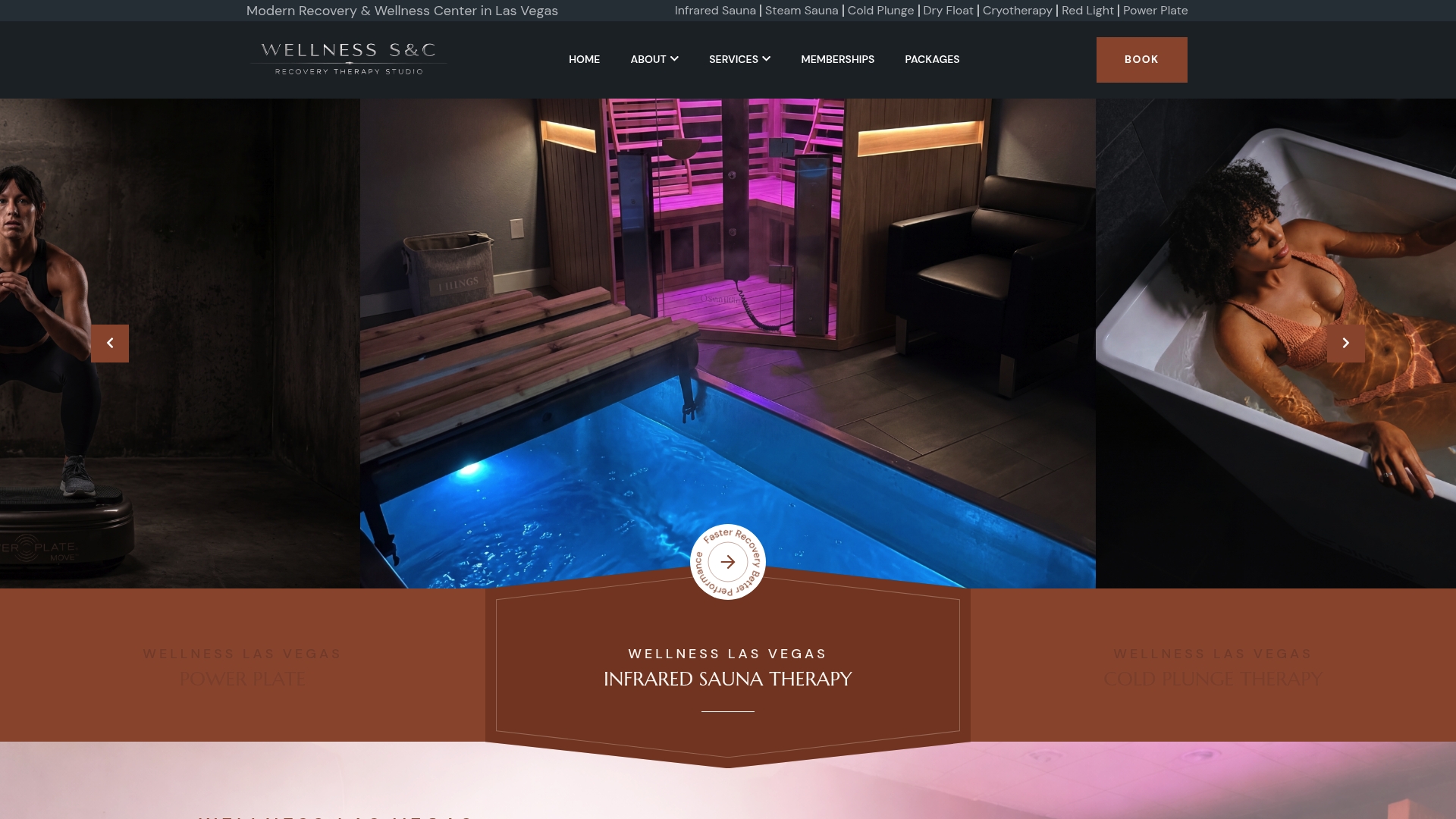
The real advantage for Las Vegas clients is the integration. Pairing infrared sauna sessions with cryotherapy or red light therapy between sessions lets you reach higher weekly frequencies without the accumulated fatigue that stops most people from progressing. The team at Wellnesslasvegas builds frequency plans around your specific goals, whether that is cardiovascular longevity, athletic recovery, or stress management, and adjusts for the desert climate’s hydration demands.
Private rooms, premium equipment, and a clean professional environment mean your sessions are consistent and comfortable from week one. Book your first session at Wellnesslasvegas and get a frequency plan that actually fits your life in Las Vegas.
Most healthy adults benefit most from 4–7 sessions per week at 15–20 minutes each, based on Kuopio Finnish cohort data showing the largest mortality risk reductions at this frequency range. Beginners should start at 1–2 sessions per week and build up over 3–6 months.
The 20-minute guideline is a maximum exposure recommendation for a single round, not a target. Individual response varies by hydration status and temperature, and Healthline notes that you should exit immediately upon feeling dizzy, regardless of how much time has passed.
The Kuopio study found that 4–7 sessions per week at 175–195°F for 15–20 minutes produced a 48% reduction in cardiovascular mortality compared to once-weekly use. Even 2–3 sessions per week showed meaningful reductions.
Sauna-induced sweating supports the elimination of certain heavy metals and environmental compounds through the skin. Consistency matters more than session length here: regular moderate sessions at 3–5x per week produce better cumulative results than occasional long ones.
Daily sauna use is safe for fully heat-adapted individuals, but Las Vegas’s dry desert climate requires stricter hydration discipline than most guides recommend. Drink at least 500 mL of water before and after each session, add electrolytes at daily frequencies, and shorten sessions on days when you have been exposed to intense outdoor heat.

